COVID-19 Pandemic: Causes, Global Impact, Response, and Lessons Learned
The COVID-19 pandemic was one of the defining events of the early twenty-first century. Beginning with the emergence of a previously unknown coronavirus in late 2019, the disease spread across continents within months and disrupted healthcare systems, economies, education, travel, and everyday life on an unprecedented scale.
COVID-19 was caused by a new coronavirus called severe acute respiratory syndrome coronavirus 2, or SARS-CoV-2. The virus spread efficiently between people, including through respiratory particles in shared indoor spaces. On 30 January 2020, the World Health Organization (WHO) declared the outbreak a Public Health Emergency of International Concern. On 11 March 2020, WHO characterized COVID-19 as a pandemic.
The pandemic also produced an extraordinary scientific response. Researchers developed vaccines in record time, improved treatments for severe disease, established large-scale testing and surveillance systems, and learned more about viral evolution and long-term illness.
What Is COVID-19?
COVID-19 is the disease caused by SARS-CoV-2. The virus belongs to the coronavirus family, which includes viruses responsible for several respiratory illnesses.SARS-CoV-2 primarily spreads through infectious respiratory particles released when an infected person breathes, speaks, coughs, or sneezes. Transmission is particularly efficient during close contact and in poorly ventilated indoor environments.
COVID-19 can produce a wide range of illness. Some infected people have no noticeable symptoms, while others develop fever, cough, fatigue, sore throat, headache, breathing difficulties, or other symptoms. Severe infection can result in pneumonia, respiratory failure, blood-clotting complications, organ damage, and death.
The Emergence of COVID-19
Cases of an unusual pneumonia were recognized in Wuhan, China, in December 2019. Scientists subsequently identified a previously unknown coronavirus as the cause.The exact origins of SARS-CoV-2 remain an area of scientific investigation. WHO’s Scientific Advisory Group for the Origins of Novel Pathogens, or SAGO, published an independent assessment in 2025. Its review concluded that the available evidence weighs more strongly toward a zoonotic origin, meaning transmission from animals to humans, but also stated that important information needed to fully evaluate all hypotheses has not been made available. Consequently, the origin of the virus has not been established with complete certainty.
This distinction is important. Evidence about the virus’s emergence should be separated from claims that go beyond what scientific investigations have established.
From Local Outbreak to Global Pandemic
During January and February 2020, SARS-CoV-2 spread internationally.
Because the virus could spread before or around the time symptoms appeared, and because some infected people had mild or no symptoms, identifying every transmission chain proved difficult. International travel also allowed infections to move rapidly between countries.
WHO declared a Public Health Emergency of International Concern on 30 January 2020. As transmission expanded across multiple regions, WHO characterized COVID-19 as a pandemic on 11 March 2020.
Governments responded in different ways, but most countries eventually introduced combinations of testing, isolation, quarantine, contact tracing, restrictions on gatherings, travel measures, mask policies, improved ventilation guidance, and other interventions.
How COVID-19 Affected Human Health
The health effects of COVID-19 varied considerably.
Older adults and people with certain underlying medical conditions faced a greater risk of severe disease. Risk factors included conditions affecting the heart and lungs, diabetes, obesity, weakened immune systems, and other chronic illnesses. Vaccination also became an important tool for reducing the risk of severe outcomes.
The pandemic placed extraordinary pressure on hospitals. During major waves, intensive-care units filled with patients requiring oxygen, respiratory support, and other specialized treatment.
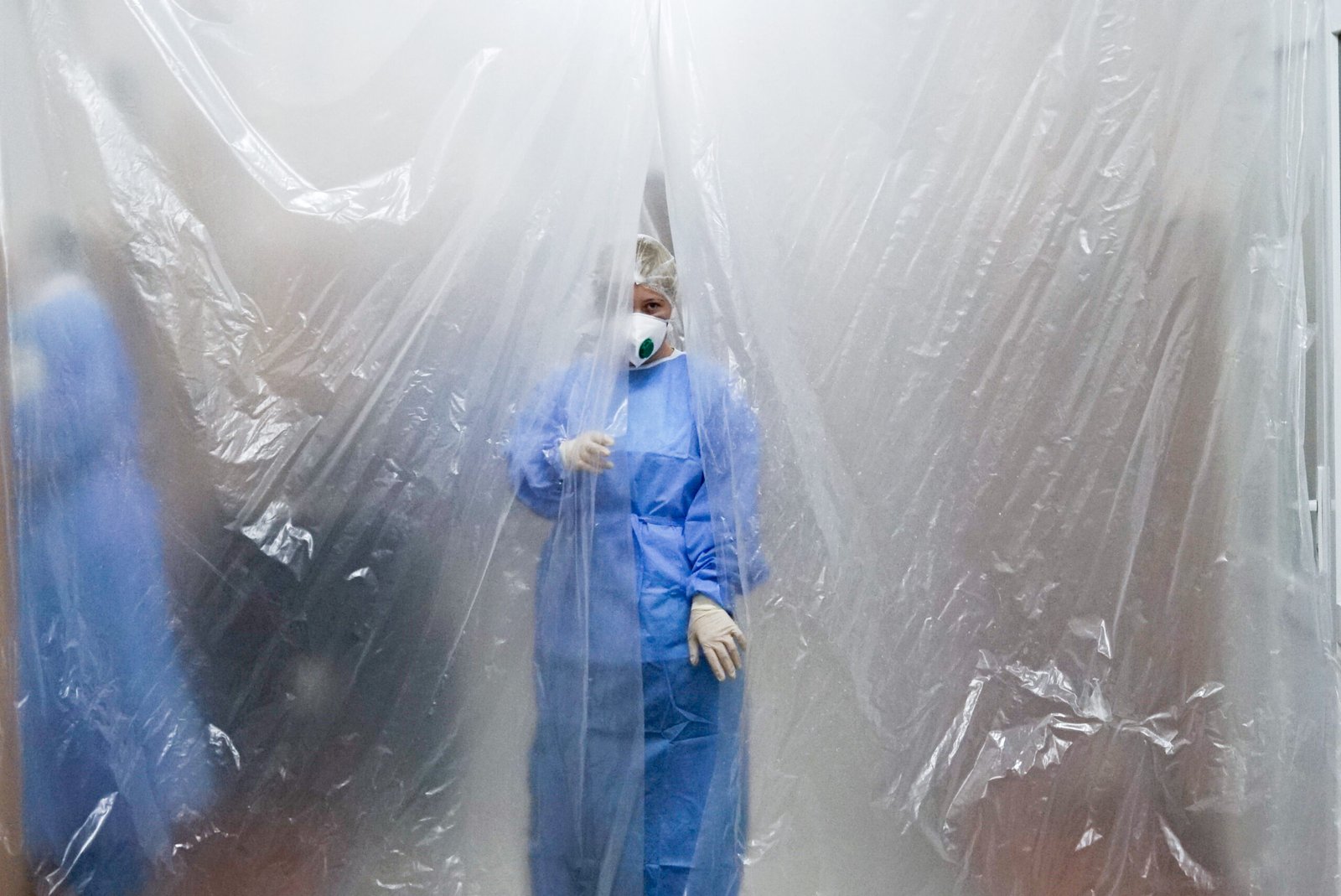
Healthcare workers faced long working hours, shortages of protective equipment in some settings, infection risks, psychological stress, and repeated surges in demand.
The consequences were not limited to COVID-19 patients. Hospitals in heavily affected regions sometimes had to postpone or reorganize treatment for other medical conditions as resources were redirected toward the pandemic.
The Global Public-Health Response
Public-health measures became a defining feature of the pandemic.
Testing helped identify infected people and supported isolation and contact tracing. Quarantine was used for people who had been exposed to infection, while isolation separated infected individuals from others.
Masks became widely used because they could reduce the amount of infectious respiratory material released into shared spaces. Ventilation and avoiding crowded indoor environments also became important parts of respiratory-virus control.
Some governments introduced temporary restrictions on businesses, schools, travel, and large gatherings. These policies differed considerably in duration and intensity and were often adjusted as infection rates, hospital capacity, scientific knowledge, and vaccination coverage changed.
The pandemic demonstrated both the value and difficulty of public-health interventions. Measures could reduce transmission and protect healthcare capacity, but they also carried social and economic costs.
The Development of COVID-19 Vaccines
The development of vaccines was one of the most significant scientific achievements of the pandemic.
Several factors made rapid development possible. Scientists had decades of previous coronavirus research to build upon, vaccine technologies had already been developed before 2020, and researchers, manufacturers, regulators, governments, and international organizations mobilized enormous resources.
mRNA vaccines represented a particularly important technological advance. Instead of delivering the virus itself, these vaccines use messenger RNA to instruct cells temporarily to produce a harmless piece of the virus, allowing the immune system to learn how to recognize it.
Large clinical trials were conducted before vaccines received regulatory authorization. Subsequent real-world evidence showed that vaccination substantially reduced the risk of severe COVID-19, hospitalization, and death, although protection against infection and transmission changed as immunity waned and new variants emerged.
International initiatives such as COVAX were established to improve access to vaccines across countries, although major inequalities remained.
Treatments and Advances in Medical Care
Medical treatment improved substantially as researchers learned more about COVID-19.
For hospitalized patients with severe disease requiring oxygen, corticosteroids such as dexamethasone became an important evidence-based treatment. Antiviral medicines, including remdesivir in appropriate circumstances, also became part of clinical management.
For certain people at higher risk of progressing to severe disease, oral antiviral treatment such as nirmatrelvir combined with ritonavir became an important early-treatment option. Treatment recommendations have evolved as evidence, variants, available medicines, and patient risk profiles changed.
The pandemic also improved understanding of oxygen therapy, blood-clotting complications, inflammatory responses, respiratory support, and rehabilitation.
COVID-19 Variants
SARS-CoV-2 continually changed as it spread.
Some genetic changes had little effect, while others altered characteristics such as transmissibility, immune escape, or disease patterns. WHO classified several major variants as Variants of Concern, including Alpha, Delta, and Omicron.
Alpha contributed to major waves in late 2020 and early 2021. Delta became dominant in many regions during 2021 and was associated with increased transmissibility and substantial pressure on healthcare systems.
Omicron emerged in late 2021 and spread extremely rapidly. Its descendants became dominant globally, while its characteristics—including substantial immune escape—changed the course of the pandemic.
The emergence of variants demonstrated why genomic surveillance became an essential part of pandemic preparedness.
Impact on Society and the Global Economy
COVID-19 disrupted nearly every part of daily life.
Schools and universities closed or moved to remote learning in many countries. Students faced interruptions to education and social development, while teachers and families had to adapt rapidly to new forms of learning.
Businesses experienced closures, supply-chain disruptions, labor shortages, reduced demand, and changing consumer behavior. Industries dependent on travel and face-to-face activity were particularly affected.
Air travel and tourism declined sharply during the early pandemic. Working from home became common in occupations where it was possible, accelerating changes in workplace technology and employment practices.
The pandemic also affected mental health and social relationships. Isolation, bereavement, financial uncertainty, disrupted routines, and fear of infection contributed to psychological distress in many communities.
Global Inequality During the Pandemic
The pandemic exposed major differences in access to healthcare and medical resources.
Countries and communities varied widely in their ability to obtain diagnostic tests, protective equipment, oxygen, intensive-care capacity, medicines, and vaccines.
Vaccine access became a particularly visible issue. Wealthier countries generally secured large vaccine supplies earlier, while many lower-income countries experienced delays.
COVAX attempted to support more equitable global access, but supply constraints, financing challenges, manufacturing capacity, logistics, and differences in healthcare infrastructure complicated the effort.
The experience highlighted the importance of strengthening healthcare systems and manufacturing capacity before—not during—the next global health emergency.
Misinformation and Communication Challenges
The pandemic produced an enormous amount of information, but not all of it was reliable.
False claims about the virus, vaccines, treatments, transmission, and supposed cures circulated rapidly through social media and other communication channels.
Scientists and public-health authorities also faced the difficult task of communicating evolving evidence. Recommendations sometimes changed as researchers obtained better data, which could create confusion even when changing guidance reflected normal scientific practice.
The pandemic demonstrated that effective communication requires transparency about uncertainty, clear explanations of evidence, rapid correction of false information, and public trust.
Long COVID and the Continuing Health Impact
Not everyone who recovered from acute COVID-19 returned immediately to their previous level of health.
WHO uses the term post-COVID-19 condition, commonly called Long COVID, for a range of symptoms that can continue or develop after the initial infection. Symptoms can include fatigue, breathlessness, cognitive difficulties, sleep problems, headaches, and muscle or joint pain.
The condition can affect daily activities and employment. Researchers continue to investigate why it develops, why symptoms vary between people, and which treatments and rehabilitation approaches are most effective.
Most people recover from COVID-19 without developing long-term problems, but Long COVID remains an important public-health and medical research issue.
The End of the Global Emergency
On 5 May 2023, WHO announced that COVID-19 no longer constituted a Public Health Emergency of International Concern.
The decision did not mean that COVID-19 had disappeared. WHO described it as a transition from emergency response toward longer-term management of an established and ongoing health problem.
By that point, global population immunity had increased through vaccination, infection, or both, while reported deaths, hospitalizations, and intensive-care admissions had declined from earlier peaks.
SARS-CoV-2 continued to circulate after the emergency declaration ended, and COVID-19 remained a cause of illness and death.
Lessons Learned from the Pandemic
The COVID-19 pandemic produced important lessons for future health emergencies.
Pandemic preparedness: Countries need surveillance systems capable of detecting unusual outbreaks early.
Healthcare capacity: Hospitals require sufficient staff, oxygen supplies, protective equipment, intensive-care capacity, and flexible systems that can expand during emergencies.
Scientific research: Rapid collaboration and open sharing of data can accelerate vaccine, diagnostic, and treatment development.
Vaccine and medicine manufacturing: Global production capacity and diversified supply chains can reduce dependence on a small number of manufacturing centers.
Public communication: Health authorities must communicate clearly, acknowledge uncertainty, and explain why recommendations may change.
International cooperation: Viruses do not respect national borders. Surveillance, research, vaccine access, and emergency preparedness require international coordination.
Long-term monitoring: The pandemic also demonstrated the importance of studying persistent health effects such as Long COVID rather than focusing only on the acute phase of an outbreak.
Conclusion
The COVID-19 pandemic transformed modern public health and became a defining historical event.
A new coronavirus emerged at the end of 2019 and spread internationally within months. The resulting pandemic overwhelmed healthcare systems, disrupted education and employment, changed travel and social life, and produced enormous economic and human consequences.
At the same time, the crisis demonstrated the power of modern science. Vaccines were developed at unprecedented speed, treatments improved, genomic surveillance expanded, and researchers rapidly accumulated knowledge about a new infectious disease.
The pandemic also exposed weaknesses: unequal access to healthcare and vaccines, fragile supply chains, gaps in preparedness, communication failures, and the difficulty of coordinating an international response.
COVID-19 remains part of the world’s health landscape even after the end of WHO’s emergency declaration. Its lasting historical significance lies not only in the scale of the crisis, but also in the lessons it provides about preparedness, scientific cooperation, healthcare resilience, communication, and international solidarity.