Fukushima Nuclear Disaster: Causes, Events, and Impact
On 11 March 2011, northeastern Japan was struck by one of the most powerful earthquakes ever recorded. The magnitude-9.0 Tōhoku earthquake generated a massive tsunami that devastated coastal communities and triggered a nuclear accident at the Fukushima Daiichi Nuclear Power Station.
The Fukushima disaster became one of the most significant nuclear accidents in modern history. Three reactors suffered severe core damage after the plant lost electrical power and the ability to maintain adequate cooling. Hydrogen explosions damaged several reactor buildings, radioactive materials were released, and large areas around the plant were evacuated.
The accident was rated Level 7 on the International Nuclear and Radiological Event Scale, the highest level. Yet Fukushima cannot be understood simply as a nuclear accident. It was the result of a cascading natural disaster in which an earthquake, tsunami, loss of power, cooling failures, emergency-response difficulties, and weaknesses in nuclear safety arrangements interacted.
What Was the Fukushima Daiichi Nuclear Power Plant?
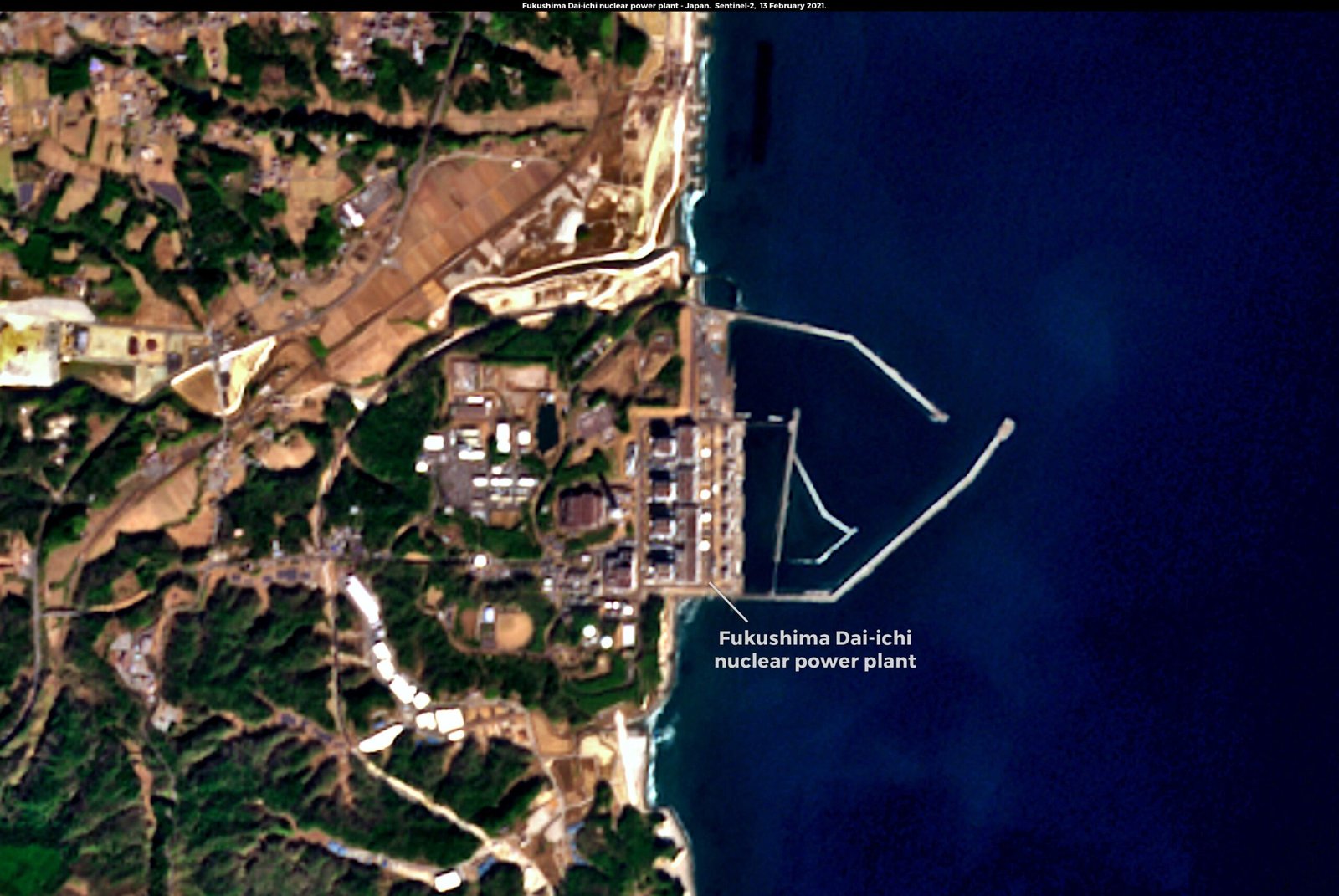
The Fukushima Daiichi Nuclear Power Station is located on Japan’s northeastern Pacific coast in Fukushima Prefecture, approximately 220 kilometers northeast of Tokyo. It was operated by Tokyo Electric Power Company, or TEPCO.
The station contained six boiling-water reactors. Units 1, 2, and 3 were operating on 11 March 2011, while Units 4, 5, and 6 were shut down for maintenance or other work.
Nuclear reactors continue to produce substantial heat even after a chain reaction is stopped. This means that reliable cooling and electrical systems are essential after an emergency shutdown.
The plant had been designed with multiple layers of protection, including emergency diesel generators and batteries. The disaster demonstrated, however, that extreme natural hazards could defeat several protective systems simultaneously.
The Tōhoku Earthquake and Tsunami
At 2:46 p.m. local time on 11 March 2011, a magnitude-9.0 earthquake struck beneath the Pacific Ocean off northeastern Japan.
The earthquake caused widespread destruction and automatically shut down the operating reactors at Fukushima Daiichi. The reactors responded as designed by stopping the nuclear chain reaction. The earthquake also disrupted the external electricity supply to the station. Emergency diesel generators started and initially provided electricity for essential safety systems. The most serious problem came approximately 50 minutes later. A huge tsunami reached the Fukushima Daiichi site. Seawater flooded important electrical equipment and disabled many of the emergency generators and associated systems. The earthquake itself therefore did not cause the reactor meltdowns directly. The critical escalation occurred when the tsunami overwhelmed the plant’s defenses and caused a prolonged loss of power and cooling capability.
How the Nuclear Accident Began
Once the tsunami flooded key equipment, Fukushima Daiichi experienced what is known as a station blackout: the plant lost normal external electricity and much of its emergency electrical capability. Without sufficient electricity, operators could not maintain all of the systems required to circulate cooling water through the reactors.
Units 1, 2, and 3 had already been shut down, but their fuel continued generating decay heat. Without adequate cooling, water levels inside the reactor vessels fell. As the water level dropped, portions of the fuel assemblies became exposed. Temperatures increased dramatically, causing severe damage to the fuel and reactor cores. Operators worked under extraordinarily difficult conditions. Instruments and communications were affected, access to equipment was difficult, and the surrounding region was simultaneously dealing with the enormous destruction caused by the earthquake and tsunami.
Reactor Meltdowns and Hydrogen Explosions
The three operating reactors experienced severe core damage.
Unit 1
Unit 1 lost cooling capability soon after the tsunami. The fuel became exposed as water levels fell, leading to extensive core damage.
A hydrogen explosion occurred in the upper part of the Unit 1 reactor building on 12 March. The explosion damaged the building but was not a nuclear explosion.
Unit 2
Unit 2 also experienced loss of cooling and severe core damage.
Unlike Units 1 and 3, the reactor building did not experience the same type of large hydrogen explosion. However, radioactive material was released during the accident, and Unit 2 suffered extensive internal damage.
Unit 3
Unit 3 experienced severe loss of cooling and core damage.A hydrogen explosion occurred in the Unit 3 reactor building on 14 March, causing extensive structural damage.Hydrogen was produced because extremely hot fuel-cladding materials reacted with steam when the fuel became exposed. The hydrogen accumulated in the reactor buildings and, when mixed with air at the appropriate concentration, ignited.Unit 4 also suffered a hydrogen explosion on 15 March. Unit 4’s reactor was shut down at the time, and investigations concluded that hydrogen from Unit 3 likely entered the Unit 4 building through connected ventilation pathways.
Evacuation and Emergency Response
The Japanese government began issuing evacuation orders on the night of 11 March. The evacuation area was progressively expanded from 2 kilometers to 3 kilometers, then 10 kilometers, and ultimately 20 kilometers from the plant by the evening of 12 March.
Residents within a wider area were later instructed to shelter or evacuate. The emergency response was complicated by destroyed roads, damaged communications, power failures, traffic congestion, and the simultaneous displacement of large numbers of people by the tsunami.
Hospitals and nursing homes presented particular challenges because vulnerable patients could not always be moved quickly or easily. Authorities also introduced restrictions on some food and drinking-water supplies after radioactive contamination was detected.Emergency workers, plant operators, firefighters, soldiers, and other personnel worked in hazardous and rapidly changing conditions to restore power, inject cooling water, control pressure, and limit further releases. The International Atomic Energy Agency monitored developments and provided technical information and international coordination during the crisis.
Radiation Release and Public Health
The accident released radioactive materials, including radioactive iodine and cesium, into the environment.
Radiation exposure became a major public concern, but it is important to distinguish the risks created by the nuclear accident from the enormous health and social consequences of the earthquake, tsunami, evacuation, and displacement. The World Health Organization assessed radiation-related health risks using estimated exposure levels. The United Nations Scientific Committee on the Effects of Atomic Radiation, or UNSCEAR, later conducted extensive scientific assessments using monitoring data and published research.
UNSCEAR’s 2020/2021 assessment concluded that no adverse health effects among Fukushima residents had been documented that could be directly attributed to radiation exposure from the accident. It also concluded that radiation-related increases in cancer incidence were unlikely to be detectable at the population level given the estimated exposure levels. This does not mean that the accident was harmless. Radiation releases required protective measures, environmental monitoring, food controls, evacuation, and long-term scientific surveillance. In addition, the psychological and social consequences of displacement were substantial. It is also important not to automatically attribute every illness observed after the disaster to radiation. Scientific assessments distinguish between radiation exposure and health effects associated with evacuation, disruption of medical care, stress, changes in lifestyle, and displacement.
Environmental and Economic Impact
Radioactive materials contaminated portions of land and affected agricultural and fisheries activities. Japan established extensive monitoring programs and imposed restrictions where radioactive concentrations exceeded regulatory limits. Decontamination work removed or treated contaminated soil and materials in affected areas. Environmental monitoring has continued for years.
For local communities, the consequences went beyond radiation itself. Homes, businesses, farms, schools, and community networks were disrupted. Some residents were unable to return home for years, while others chose not to return. The disaster also created major economic costs through evacuation, compensation, decontamination, reconstruction, lost economic activity, and the long-term decommissioning of the damaged reactors. The wider consequences extended to Japan’s energy system. Many nuclear reactors across Japan were taken offline for inspections and regulatory review, increasing reliance on other energy sources.
Cleanup and Decommissioning
The Fukushima Daiichi site remains under a long-term decommissioning program.
The damaged reactors must be maintained in a stable condition while workers develop methods to remove highly radioactive fuel debris—the mixture of melted fuel, structural materials, and other reactor components produced during the accident.
Another major challenge has been contaminated water.
Water used to cool the damaged reactor fuel becomes contaminated, while groundwater and rainwater can also enter damaged buildings. Japan has developed systems to reduce and treat this water. The Advanced Liquid Processing System, commonly known as ALPS, removes many radioactive substances from contaminated water. Treated water has been subject to monitoring and international review. In 2023, Japan began releasing ALPS-treated water into the sea after dilution and monitoring. The IAEA’s comprehensive assessment concluded that the planned discharge was consistent with international safety standards and would have a negligible radiological impact on people and the environment. Independent monitoring and international review have continued.
Decommissioning is expected to take decades. The Japanese government describes the overall effort as a 30-to-40-year process, although individual stages remain technically challenging.
Lessons Learned from Fukushima
Fukushima changed nuclear safety thinking around the world.
One major lesson was that safety assessments must consider extreme natural hazards rather than relying too heavily on historical assumptions. Earthquakes, tsunamis, floods, extreme weather, and combinations of hazards must be considered when designing and regulating nuclear facilities.Another lesson concerns the importance of maintaining essential safety functions even after multiple systems fail.
Nuclear plants require electricity, cooling, instrumentation, communication, and emergency access. Fukushima showed that backup systems themselves can be vulnerable if they share common weaknesses.Japan established the Nuclear Regulation Authority in 2012. The new regulator emphasized independence, stronger safety standards, severe-accident measures, protection against earthquakes and tsunamis, and improved emergency preparedness.
Other countries also reassessed their nuclear facilities.
In the United States, the Nuclear Regulatory Commission introduced additional requirements following Fukushima, including measures concerning backup power, spent-fuel-pool monitoring, accident management, and assessments of earthquake and flooding hazards.The broader lesson was that nuclear safety is not simply about individual pieces of equipment. It also depends on regulation, emergency planning, organizational culture, independent oversight, communication, and the ability to respond to unexpected combinations of failures.
Fukushima’s Long-Term Legacy
Fukushima profoundly affected Japan’s relationship with nuclear power.
Before 2011, nuclear energy supplied a significant share of Japan’s electricity. After the accident, most of Japan’s nuclear reactors were shut down while safety standards were reviewed.Public confidence in nuclear power declined sharply, and debates over energy security, climate change, electricity costs, and nuclear safety became central to Japanese energy policy.Internationally, Fukushima became a reference point for nuclear safety assessments. Regulators and plant operators around the world reconsidered their assumptions about severe accidents and external hazards.
The disaster also demonstrated that the consequences of a major nuclear accident extend far beyond the reactor itself. Evacuation, public trust, environmental monitoring, economic disruption, and long-term community recovery can last for decades.
The Fukushima nuclear disaster began with a natural catastrophe of extraordinary scale. The 11 March 2011 earthquake shut down the operating reactors, but the subsequent tsunami overwhelmed critical electrical and cooling systems.The resulting loss of cooling led to severe core damage in Units 1, 2, and 3, hydrogen explosions, and releases of radioactive material.The disaster caused extensive disruption and required the evacuation of nearby communities. Its long-term consequences have included environmental monitoring, decontamination, economic costs, social disruption, and one of the world’s most complex nuclear decommissioning projects.
Scientific assessments have found no documented adverse health effects among Fukushima residents directly attributable to radiation exposure from the accident, while recognizing the need for continued monitoring and acknowledging the significant social and psychological consequences of the disaster.
Fukushima’s most enduring lesson is the importance of preparing for events that exceed expectations. Nuclear safety depends not only on reactor design, but also on robust infrastructure, independent regulation, emergency planning, effective communication, and a safety culture capable of confronting extreme and unexpected conditions.