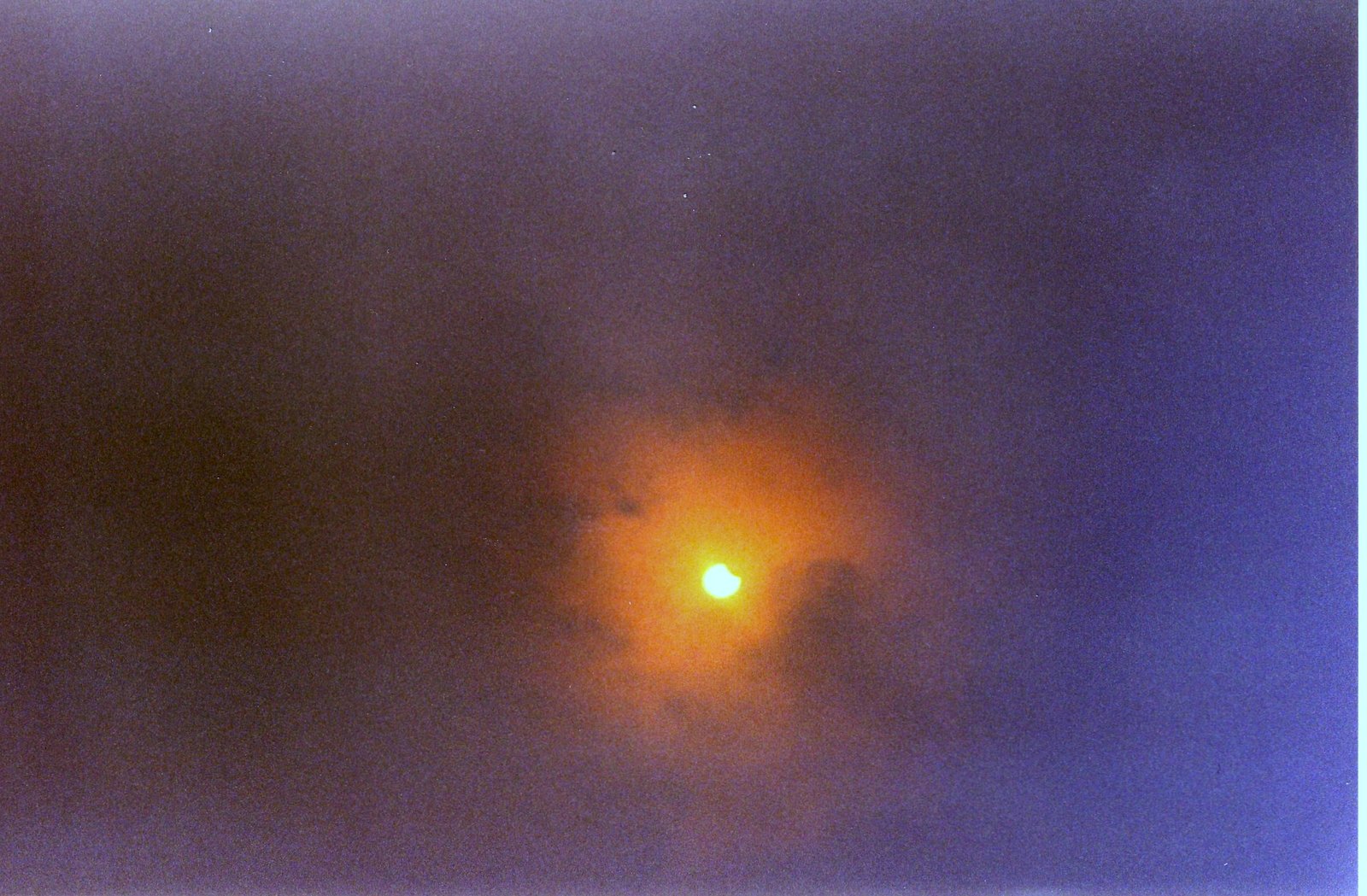
Total Eclipse of the Sun: August 11, 1999
On August 11, 1999, one of the most remarkable total solar eclipses of the twentieth century crossed Europe, the Middle East, and southern Asia. As the Moon moved directly between the Earth and the Sun, its shadow swept across a vast stretch of the planet, briefly turning daylight into darkness.
Partial solar eclipses occur relatively frequently, but a total solar eclipse is a much rarer spectacle at any particular location. The 1999 event generated enormous excitement because its path of totality passed through several heavily populated regions, giving millions of people an opportunity to witness the phenomenon.
A Shadow Across Continents
The eclipse’s path crossed the Atlantic before reaching southwestern England, including parts of Cornwall and Devon. It continued across northern France, southern Germany, Austria, Hungary, and Romania before moving through Turkey, Iran, southern Pakistan, and India. The shadow eventually reached the Bay of Bengal.
Moving at approximately 1,500 miles per hour in some parts of its journey, the Moon’s shadow transformed the sky along its path. For a few extraordinary minutes, the Sun’s bright disk disappeared behind the Moon, revealing the solar corona—the faint outer atmosphere normally hidden by the Sun’s brilliance.
In Europe, however, the experience varied considerably. Cloudy weather prevented many spectators from seeing the eclipse clearly, while enormous traffic jams formed as people traveled toward locations within the path of totality. Others found a better view above the clouds. Royal Air Force personnel photographed the eclipse from the air, while passengers aboard Concorde experienced the spectacle from the supersonic aircraft.
Millions of people also watched television coverage. In Britain, the eclipse coincided with a remarkable increase in electricity demand when approximately 13.4 million viewers tuned in, reportedly setting a record for a daytime television event during the working week.
Prayers and Rituals
For many visitors, the eclipse was an extraordinary scientific and tourist attraction. For millions of Muslims and Hindus, it was also an occasion for spiritual reflection and religious observance.
The Iranian city of Isfahan attracted large numbers of international visitors after being identified as a promising viewing location. Crowds filled public spaces and gathered along the banks of the Zayandeh Rud River. One French tourist described the atmosphere as a frenzy, with people packing the city’s main square and surrounding riverbanks.
Across the Middle East, Muslim communities observed special prayers associated with natural phenomena. In India, Hindu devotees gathered at sacred sites, including the River Ganges and the holy city of Kurukshetra, where many performed ritual bathing.
The sudden disappearance of the Sun also stirred ancient fears. In Jordan, shopkeeper Samir Qalaji expressed a concern that had appeared in many cultures throughout history: the fear that the Sun might never return.
Although astronomy explains an eclipse as a predictable alignment of the Sun, Moon, and Earth, the event continued to inspire powerful emotional and cultural responses.
Where Were You When? An Eyewitness Remembers
Mark Smalley, a radio producer working for the BBC World Service, recalled his experience of following the eclipse as it crossed the Earth.
He remembered looking toward the Sun above the River Thames through inexpensive plastic eclipse glasses distributed with magazines. His radio programme tracked the eclipse’s progress, bringing listeners accounts from different locations along its path.
The programme also featured the captain of Concorde. Because the aircraft could travel at supersonic speed, its passengers were able to follow the eclipse and experience a longer period of totality than stationary observers at a single location.
As the eclipse moved toward its conclusion over the Bay of Bengal, Smalley recalled a striking report from Bangladesh. A reporter broadcasting live from a rooftop described dozens of birds rising from nearby trees, their cries filling the air as the sudden darkness disrupted their usual patterns of activity.
The moment offered a reminder that a solar eclipse affects more than human observers. The abrupt change in light can also influence the behavior of wildlife, turning an astronomical event into an experience shared by the natural world.
The Historical Significance of the 1999 Eclipse
The total solar eclipse of August 11, 1999, became one of the defining astronomical spectacles of the late twentieth century. It brought together scientists, tourists, religious communities, broadcasters, and ordinary spectators across several continents.
For some, it was an opportunity to witness the solar corona and experience a rare celestial alignment. For others, it was a moment of prayer, wonder, or reflection. Millions watched through television broadcasts, while fortunate observers beneath clear skies experienced the sudden darkness directly.
As the twentieth century approached its end, the eclipse provided a memorable reminder of humanity’s enduring fascination with the heavens—and of how a predictable astronomical event can unite people through a shared sense of wonder.
Historical note: The August 11, 1999, eclipse was one of the last total solar eclipses of the twentieth century, but it was not the millennium’s final total solar eclipse. Total solar eclipses also occurred in 2001 and 2002.
Eyewitness account: Mark Smalley, Bristol, England.