Person: Albert Einstein
Albert Einstein
Albert Einstein changed the way humanity understood space, time, gravity, and the universe.
His name became almost synonymous with genius, but Einstein was more than a brilliant scientist. He was a curious thinker, a passionate supporter of peace, and one of the most influential intellectuals of the 20th century.
His ideas transformed modern physics and helped shape the scientific world that followed.
Early Life
Albert Einstein was born on 14 March 1879 in the German city of Ulm, in the Kingdom of Württemberg.
His family later moved to Munich, where his father and uncle were involved in an electrical engineering business. As a child, Einstein developed a fascination with mathematics and science. One story often told about his childhood describes how a compass fascinated him when he was young. The invisible force that caused the needle to move made him wonder about forces that could not be seen. Einstein eventually studied at the Swiss Federal Polytechnic in Zurich, where he developed a strong interest in physics and mathematics.
The Patent Office Years
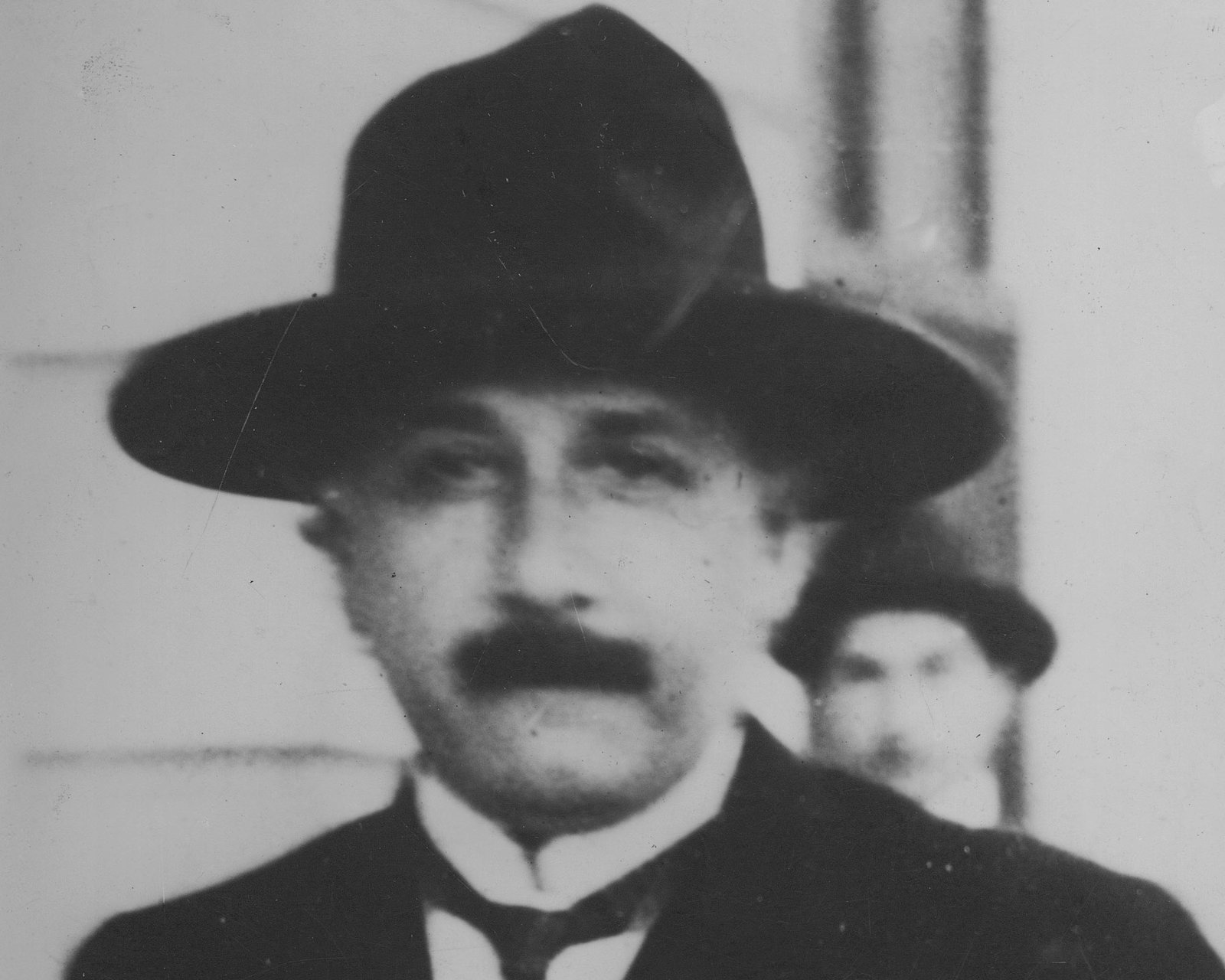
After graduating, Einstein found it difficult to obtain an academic position.In 1902, he began working as a technical examiner at the Swiss Patent Office in Bern.
The job was demanding, but it also gave Einstein something valuable: time to think.
Away from the traditional university environment, he worked on some of the ideas that would eventually transform physics.
The Miracle Year
The year 1905 became one of the most remarkable years in the history of science. While working at the patent office, Einstein published several groundbreaking scientific papers. One explained the photoelectric effect, helping establish the idea that light can behave as packets of energy called quanta.Another examined Brownian motion, providing important evidence for the existence of atoms and molecules. He also introduced his special theory of relativity, which changed the way scientists understood space and time.
And in another paper, he presented the famous equation:
E = mc²
The equation showed the relationship between mass and energy. It would eventually become one of the most famous equations in science.
Relativity
Einstein’s theory of special relativity challenged the traditional idea that time and space were absolute. According to the theory, measurements of time and distance can depend on the motion of the observer. Einstein later expanded these ideas into the general theory of relativity, published in 1915. General relativity offered a new explanation of gravity. Instead of thinking of gravity simply as a force pulling objects toward one another, Einstein described gravity as a consequence of the way massive objects affect the geometry of space and time. It was an extraordinary idea.
The Eclipse That Made Einstein Famous
In 1919, a total solar eclipse provided an opportunity to test one of the predictions of general relativity. British astronomer Arthur Eddington led observations of the eclipse that examined whether the Sun’s gravity could bend the path of starlight. The results were widely reported as supporting Einstein’s prediction. Newspapers around the world began publishing stories about the scientist whose theory had apparently changed humanity’s understanding of the universe. Einstein became an international celebrity.
Nobel Prize
Einstein received the Nobel Prize in Physics in 1921.Interestingly, the award was not primarily for relativity. He was recognized for his explanation of the photoelectric effect, which had made an important contribution to the development of quantum theory.By this point, Einstein had become one of the world’s best-known scientists.
A Voice for Peace
Einstein was also deeply concerned with politics and the future of humanity.
He supported pacifism for much of his life and spoke publicly about international cooperation and peace.
However, the rise of Adolf Hitler and Nazi Germany changed the circumstances around him.
Because Einstein was Jewish and openly opposed the Nazi regime, he became a target of Nazi propaganda.
He left Germany and eventually settled in the United States.
He never returned to live in Germany.
Einstein and the Atomic Bomb
Einstein’s name is often connected with the development of the atomic bomb, but he did not work directly on the Manhattan Project.
In 1939, concerned that Nazi Germany might develop an atomic weapon, Einstein signed a letter to U.S. President Franklin D. Roosevelt. The letter warned that developments in nuclear physics could potentially lead to powerful new weapons. The letter helped draw attention to the possibility of nuclear weapons research in the United States. Einstein later regretted the role his letter had played in encouraging the American government to take the possibility seriously. After the war, he became an outspoken advocate for nuclear disarmament and international cooperation.
Life in America
Einstein joined the Institute for Advanced Study in Princeton, New Jersey, where he continued his scientific work. He spent his later years thinking about some of the deepest questions in physics. One of his major goals was to find a unified theory that could bring together different areas of physics. He never achieved that goal.
Nevertheless, his attempts influenced later generations of scientists.
More Than a Scientist
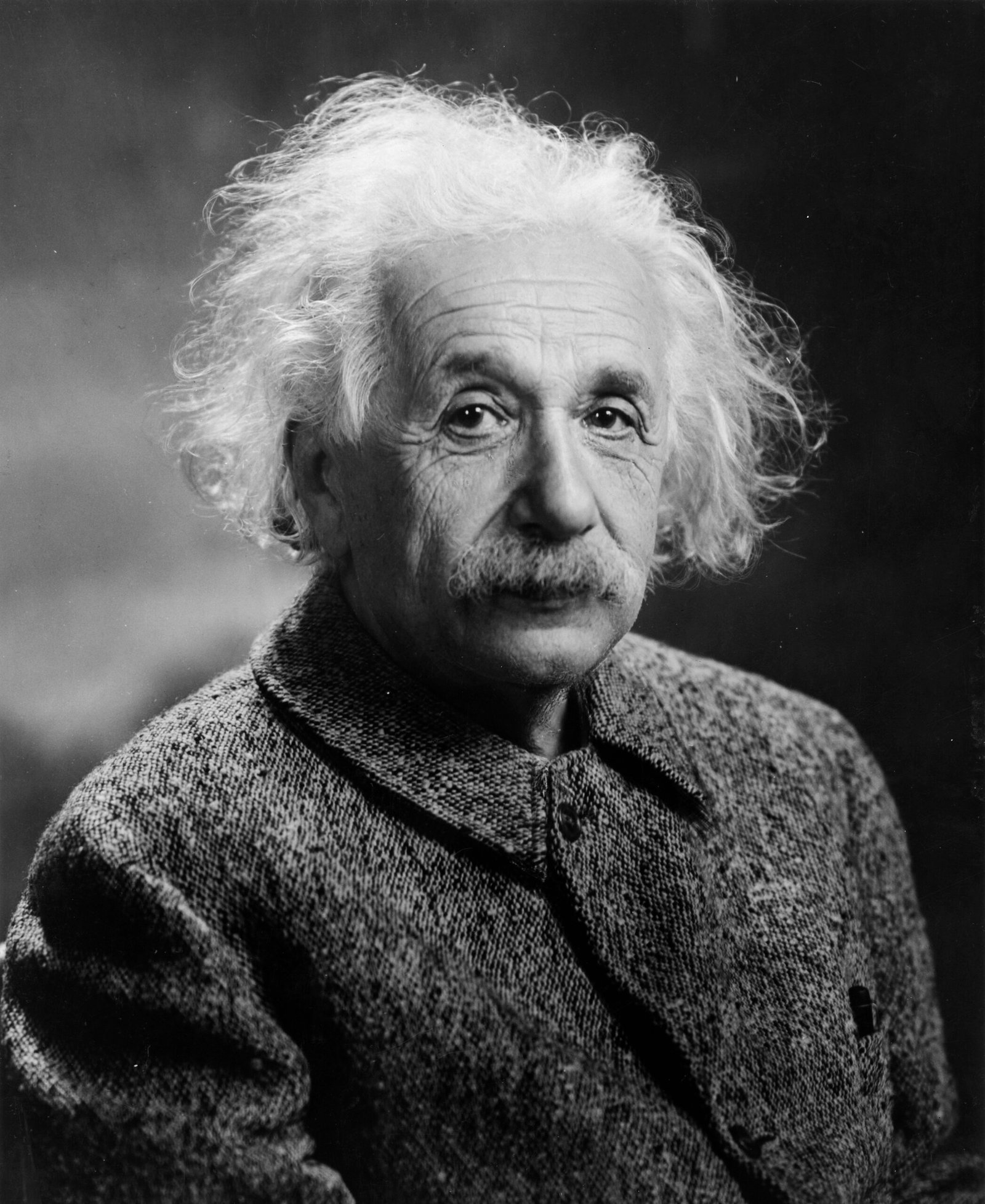
Einstein was known for his distinctive appearance, including his wild hair and casual clothing. He played the violin throughout his life and often described music as an important part of his world. He also enjoyed thinking about philosophy and the relationship between science, society, and humanity. His public image eventually became almost as famous as his scientific work. Photographs of Einstein with his distinctive hair and thoughtful expression helped turn him into a symbol of intellectual curiosity.
His Final Years
Einstein continued working and writing well into his later years.
He was offered the presidency of Israel in 1952, following the death of the country’s first president, Chaim Weizmann. Einstein declined, explaining that he lacked the experience necessary for such a political role.In his final years, he continued to advocate for peace and international cooperation.Albert Einstein died on 18 April 1955, in Princeton, New Jersey. He was 76 years old.
The Legacy of Albert Einstein
Einstein’s influence reaches far beyond the famous equation E = mc².
His theories changed physics and helped create new ways of thinking about space, time, energy, and gravity.Modern technologies and scientific research have benefited from ideas developed from his work, while his theories continue to be tested and studied more than a century later.But perhaps Einstein’s most lasting legacy is the way he approached the world.He was willing to question assumptions that seemed obvious and to follow an idea wherever the evidence led.That curiosity changed science forever.
Albert Einstein died in 1955, but the questions he asked about the universe are still being explored today.