Person: Winston Churchill
Winston Churchill
Winston Churchill was one of the most recognizable political figures of the 20th century. He is best remembered for leading Britain through the darkest years of the Second World War, when Nazi Germany seemed close to dominating Europe.
But Churchill’s life was much bigger than the war. He was a politician, soldier, writer, journalist, and historian whose career stretched across more than half a century.
Early Life
Winston Leonard Spencer Churchill was born on 30 November 1874 at Blenheim Palace in Oxfordshire, England. He was born into an aristocratic family, but his childhood was not particularly close to his parents.
Churchill struggled at school, especially with subjects such as mathematics and languages. He eventually entered the Royal Military College at Sandhurst, where he prepared for a career in the British Army.
His military career also gave him the opportunity to become a writer. Churchill reported on conflicts in places including India, Sudan, and South Africa. His newspaper reports made him increasingly well known in Britain.
Entering Politics
Churchill entered Parliament in 1900 as a member of the Conservative Party. His political career was unusual because he later crossed the floor and joined the Liberal Party before eventually returning to the Conservatives.
Over the years, he held several important government positions. He became First Lord of the Admiralty before the First World War and was closely involved in Britain’s naval preparations.
His political career suffered a major setback after the disastrous Gallipoli campaign during the First World War. Churchill resigned from the Admiralty and temporarily left the government.
He later returned to politics and continued to serve in senior positions.
The Road to War
During the 1930s, Churchill repeatedly warned about the growing military power of Adolf Hitler’s Germany.
At the time, many British politicians and members of the public hoped that another major European war could be avoided. Churchill argued that Germany’s expansion posed a serious danger and that Britain needed to strengthen its armed forces.
His warnings became increasingly important after Germany invaded Poland in September 1939 and Britain entered the Second World War.
Britain at War
Churchill became prime minister on 10 May 1940, at a moment when Britain’s position looked extremely dangerous.
German forces had launched their invasion of Western Europe. France was collapsing, and hundreds of thousands of Allied soldiers were eventually evacuated from Dunkirk.
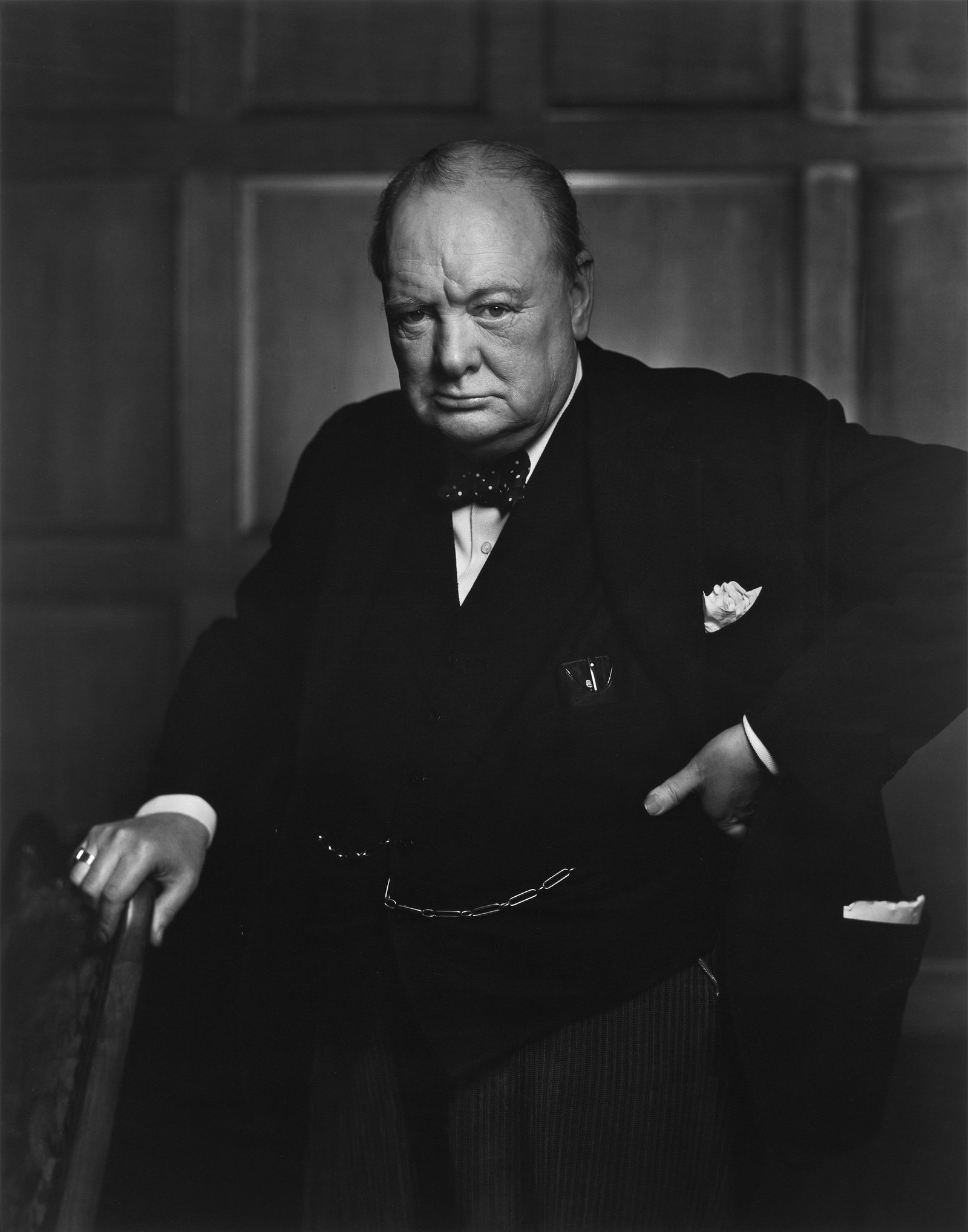
Churchill refused to accept the idea that Britain should surrender.
In speeches to the British people, he spoke openly about the enormous difficulty ahead. His words helped create a sense of determination during a period of fear and uncertainty.
The Battle of Britain followed during the summer and autumn of 1940. German aircraft attacked British cities, airfields, and infrastructure while the Royal Air Force fought to prevent Germany from gaining control of the skies.
Britain survived the campaign.
“We Shall Never Surrender”
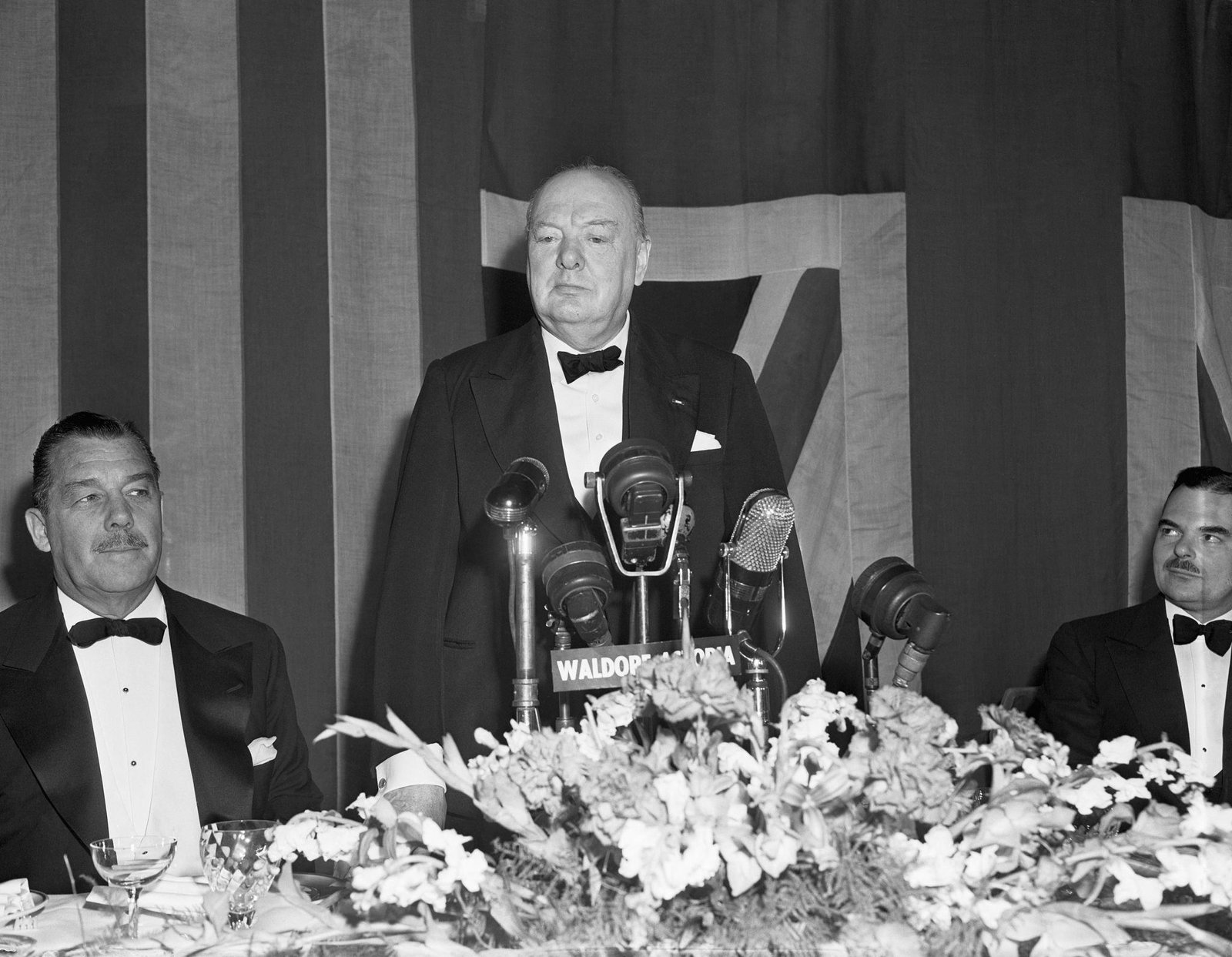
Churchill became famous for speeches that captured the mood of wartime Britain.
His speeches were not simply speeches of victory. They often acknowledged how difficult the situation was while insisting that Britain would continue fighting.
One of his most famous parliamentary speeches ended with the words:
“We shall never surrender.”
The sentence became closely associated with Churchill’s wartime leadership.
Building the Allied War Effort
Churchill understood that Britain could not defeat Nazi Germany alone.
He developed a close relationship with Franklin D. Roosevelt, the President of the United States, and later worked with Joseph Stalin, the leader of the Soviet Union.
The three Allied powers had very different political systems and interests, but they cooperated against Germany during the war.
Churchill travelled extensively during the conflict, attending important meetings and conferences with Allied leaders.
The United States entered the war after the Japanese attack on Pearl Harbor in December 1941. American economic and military power then became an enormous part of the Allied war effort.
Victory in Europe
By 1944, the Allies were preparing for the final stages of the war in Europe.
On 6 June 1944, Allied forces landed in Normandy during D-Day, opening a major Western front against Nazi Germany.
Over the following months, Allied armies moved across Western Europe. Soviet forces were advancing from the east.
Germany finally surrendered in May 1945.
Churchill had led Britain through almost five years of war, but the victory came with an enormous human cost.
Defeat at the 1945 Election
One of the surprising moments of Churchill’s life came just weeks after Germany’s surrender.
Britain held a general election in July 1945, and Churchill’s Conservative Party lost to the Labour Party.
Churchill left office as prime minister.
The result showed that wartime popularity did not necessarily translate into support for a particular post-war political program. British voters were facing a very different country after six years of war, with major questions about rebuilding, housing, employment, healthcare, and social security.
A New Warning About the Cold War
Churchill returned as prime minister in 1951 and remained in office until 1955.
Even after leaving the premiership, he continued to play an important role in international politics.
In a famous speech at Westminster College in Missouri in 1946, Churchill warned about the growing division between the Soviet Union and the Western powers. His description of an “Iron Curtain” became one of the most famous phrases associated with the beginning of the Cold War.
Churchill the Writer
Churchill was also a highly successful writer.
He wrote extensively about history, politics, and his own experiences. His major historical works included The Second World War and A History of the English-Speaking Peoples.
In 1953, Churchill received the Nobel Prize in Literature, recognized for his historical writing and his skill in presenting history.
Writing was not simply something Churchill did in his spare time. It was an important part of his life and also a major source of income.
A Complicated Legacy
Churchill remains one of the most discussed figures in modern British history.
His leadership during the Second World War is widely studied, particularly his determination to continue fighting Nazi Germany in 1940. At the same time, his long political career included positions and decisions that remain controversial and are debated by historians.
His views on the British Empire, colonial rule, race, and several political and military decisions have received extensive criticism and historical examination.
Understanding Churchill therefore requires looking beyond the famous wartime speeches and considering the whole of his political career.
The Final Years
Churchill retired as prime minister in 1955, although he remained a member of parliament for several more years.
He continued painting, writing, and spending time with his family.
Winston Churchill died on 24 January 1965, at the age of 90.
His funeral was held at St. Paul’s Cathedral in London and became a major national event.
Why Winston Churchill Still Matters
Churchill’s place in history is closely connected with the extraordinary circumstances of the Second World War.
In 1940, Britain faced the possibility of invasion and stood largely alone in Western Europe. Churchill’s decision to continue the war rather than seek a negotiated settlement became one of the defining decisions of his career.
But his story is more complicated than a collection of famous speeches.
He was a politician whose career included extraordinary achievements, serious failures, changing political loyalties, controversial views, and decisions whose consequences are still debated.
That complexity is what makes Churchill an important historical figure.
Winston Churchill was not simply the man who led Britain to victory. He was a product of his time, a participant in the events that shaped the modern world, and a figure whose legacy continues to be examined long after his death.