Fall of the Berlin Wall
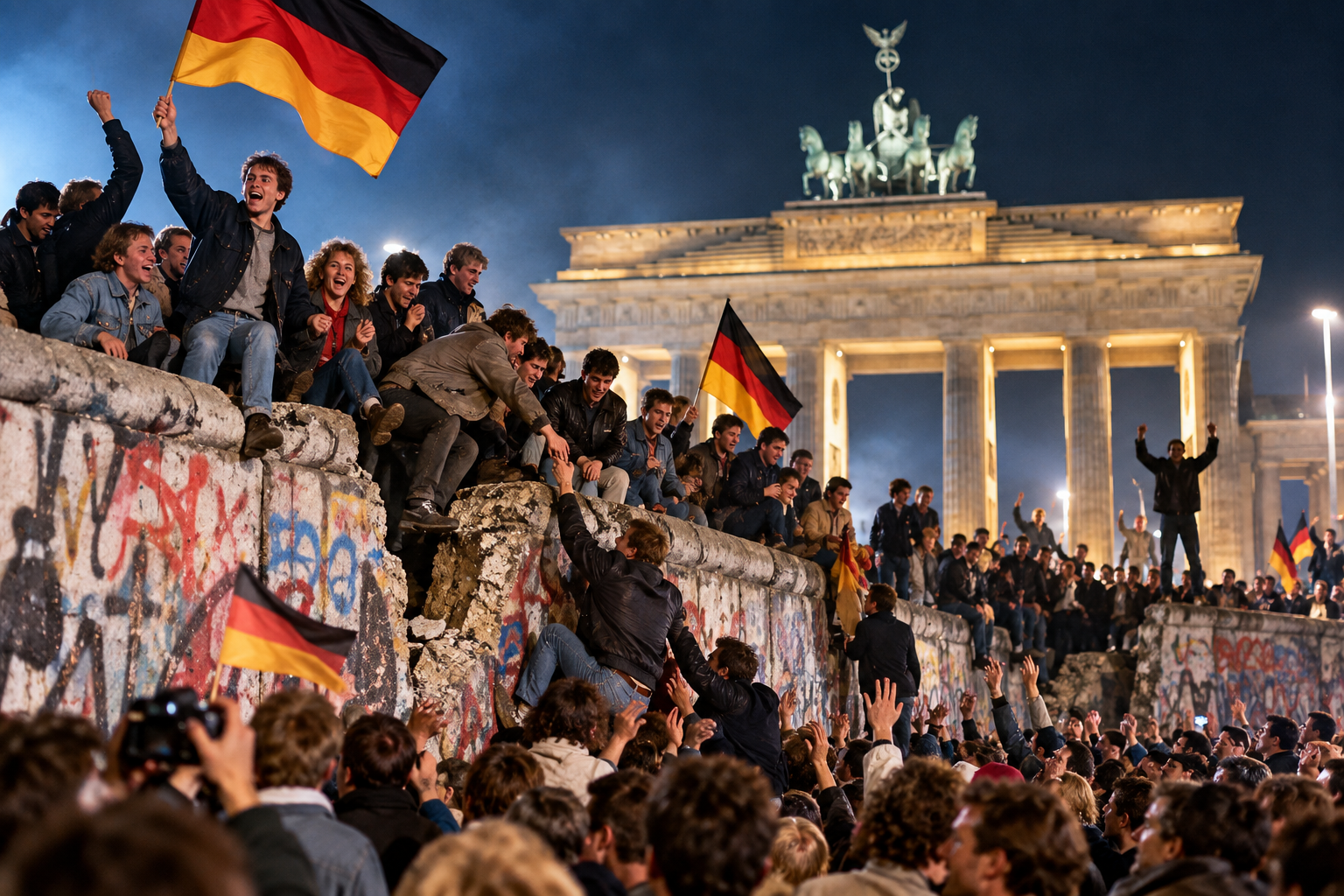
On November 9, 1989, the Berlin Wall opened after 28 years of dividing East and West Berlin, becoming one of the defining moments in the collapse of Communist rule in Eastern Europe.
The Berlin Wall was both a symbol and an instrument of division, and its removal was an equally powerful symbol of freedom.
In the 28 years of its existence, at least 75 East Germans were killed while trying to escape to the West over the Berlin Wall, the last of them in March 1989 when it still seemed that the Wall would never be brought down. But just eight months later, after the greatest political upheavals in Europe since World War II, the Wall was no more.
The possibility of change came with an announcement from the USSR that it would no longer intervene in the affairs of its Eastern European satellites, and the possibility became probability when Soviet president Mikhail Gorbachev visited East Germany in October 1989 to urge the government to introduce widespread and fundamental reforms.
HUMAN TIDE
In the four weeks after Gorbachev’s visit, millions of East Germans attended pro-democracy rallies, the Communist government fell, and the new government announced that from midnight on November 9, 1989, East Germans would be granted freedom of movement across the country’s borders—including through checkpoints in the Wall.
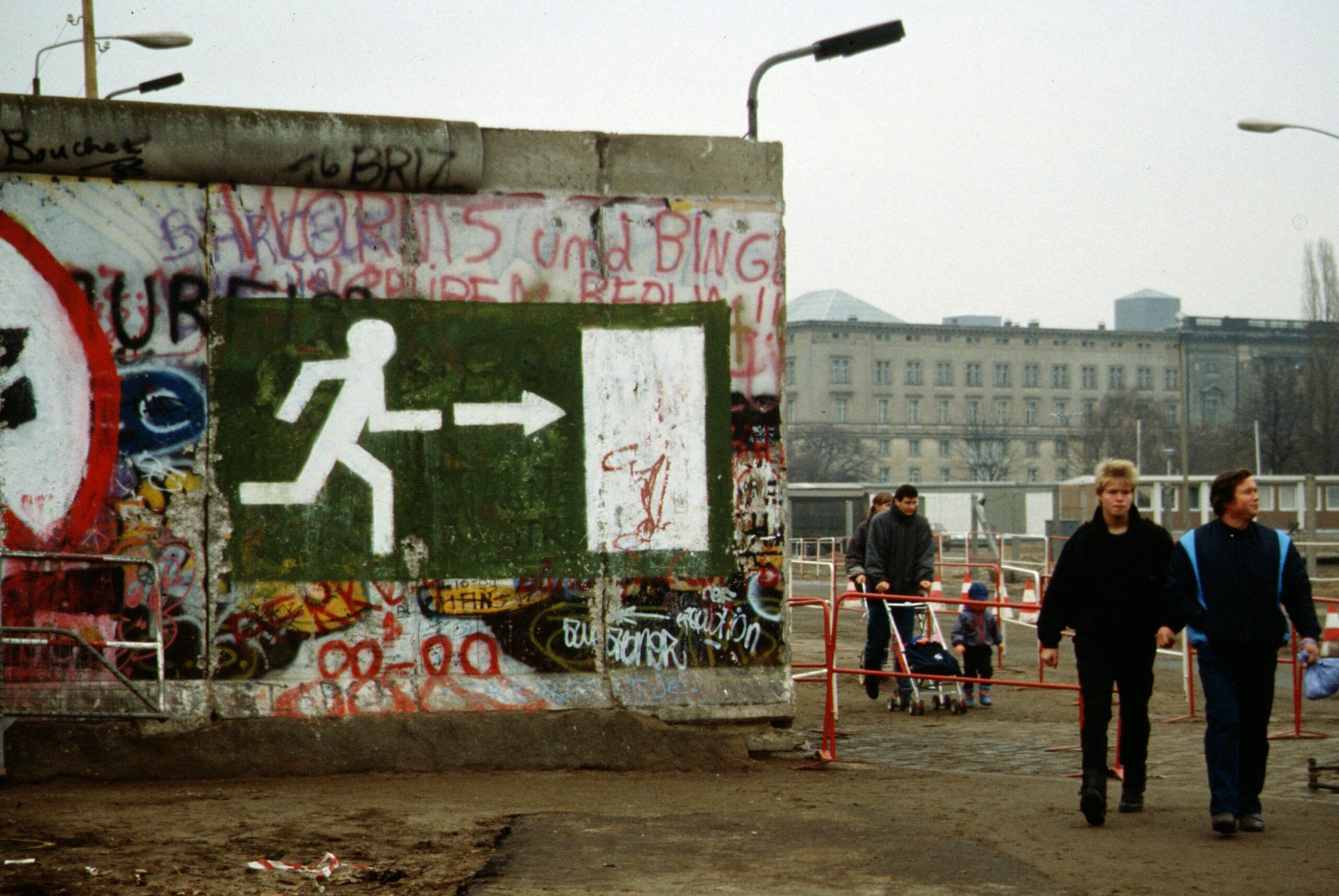
That night the world watched on television as crowds gathered on both sides of the Wall. At midnight the checkpoints were opened, as promised, and a flood of human beings began crossing over and through the Wall; the barrier of oppression had become a gate to freedom.
Over the next days and weeks, the Wall was demolished by official industrial contractors and unofficial enthusiastic individuals, with a few sections left standing as reminders of what had been.
The demolition of the Wall was followed by free East German elections, leading to the economic reunification of Germany in July 1990 and full political reunification on October 3 that year.
However, reunification, while politically desirable, proved economically difficult, with many East Germans complaining of being treated as second-class citizens and West Germans complaining of falling standards of living as a result of shouldering the financial burden of reunification.
THE COLLAPSE OF COMMUNISM ACROSS EUROPE
Germans refer to reunification as die Wende (“the change”). East Germany was not the only country formerly controlled by the USSR to experience political change in 1989 following Gorbachev’s encouragement of reform.
In January, Hungary legalized opposition parties (a new center-right coalition government was elected the following year); in August, Poland established its first non-Communist government since 1948; in September, Hungary opened its borders, effectively raising the “Iron Curtain”; in November, the Communist regimes collapsed in Bulgaria and Czechoslovakia, as well as in Germany; and in December, the Communist regime in Romania was overthrown.
The dissolution of the USSR itself followed in 1991.