India’s Independence in 1947: The Story Behind Freedom
India’s independence in 1947 was one of the most important moments in the country’s history. After nearly two centuries of British control and decades of struggle, India finally became an independent nation on 15 August 1947. This historic day represented the hopes, courage, sacrifices, and determination of millions of Indians who fought for freedom.
The journey to independence was not easy. It involved peaceful protests, revolutionary movements, political negotiations, public demonstrations, and countless sacrifices. Leaders such as Mahatma Gandhi, Jawaharlal Nehru, Subhas Chandra Bose, Sardar Vallabhbhai Patel, Bhagat Singh, and many others played important roles in the freedom movement.
However, India’s freedom was also accompanied by the painful Partition of the country into India and Pakistan. Millions of people experienced displacement, violence, and uncertainty.
Understanding the story behind Indian independence helps us appreciate the sacrifices made by earlier generations and understand the true meaning of freedom.
British Rule in India: How It Began
The British presence in India began through trade. In 1600, the English East India Company received a royal charter from Queen Elizabeth I to trade with countries in Asia.
Initially, the company established trading centres in different parts of India. Over time, it became involved in Indian politics and military conflicts.
A major turning point came in 1757 with the Battle of Plassey. The East India Company, led by Robert Clive, defeated the forces of Nawab Siraj ud-Daulah of Bengal. This victory helped the company expand its political and economic influence.
In 1765, the company received the Diwani rights of Bengal, Bihar, and Orissa, giving it control over revenue collection in these regions.
Gradually, British authority spread across much of the Indian subcontinent.
British colonial policies affected Indian agriculture, traditional industries, trade, and local administration. Heavy taxation and economic exploitation created difficulties for many Indians.
As dissatisfaction grew, resistance against British rule began to spread.
The Revolt of 1857: An Early Turning Point
The Revolt of 1857 was one of the earliest major challenges to British authority in India. It began among Indian soldiers in the Bengal Army and quickly developed into a wider uprising in several regions.
The immediate cause was the introduction of the Enfield rifle cartridges, which were believed to be greased with cow and pig fat. This offended both Hindu and Muslim soldiers.
However, the revolt had deeper causes, including political annexations, economic exploitation, military discrimination, and dissatisfaction with British policies.
Important figures associated with the uprising included:
-
Mangal Pandey: An Indian soldier whose actions at Barrackpore became associated with the beginning of the uprising.
-
Rani Lakshmibai: The Queen of Jhansi, remembered for her courage and resistance.
-
Bahadur Shah Zafar: The last Mughal emperor, who became a symbolic leader of the revolt.
-
Nana Sahib: One of the prominent leaders of the uprising.
-
Begum Hazrat Mahal: A leading figure in the resistance in Awadh.
Although the revolt was suppressed by the British in 1858, it had major consequences. The British Crown took direct control of India from the East India Company.
The uprising also became an important symbol of resistance against colonial rule.
The Rise of India’s Freedom Movement
During the late nineteenth century, political awareness and national consciousness began growing across India.
Educated Indians increasingly demanded political representation, administrative reforms, and greater participation in government.
In 1885, the Indian National Congress was established. It became one of the most influential organizations in India’s independence movement.
Early Congress leaders included Dadabhai Naoroji, Gopal Krishna Gokhale, and Surendranath Banerjee.
Initially, the organization focused on constitutional reforms and peaceful political demands. Over time, however, the freedom movement became more widespread and developed stronger demands for self-government.
Bal Gangadhar Tilak became an influential nationalist leader and promoted the idea of Swaraj, meaning self-rule.
The partition of Bengal in 1905 by the British government also encouraged widespread protests. The Swadeshi Movement encouraged Indians to boycott British goods and support locally made products.
These developments helped transform the freedom struggle into a broader national movement.
Mahatma Gandhi and the Power of Non-Violence
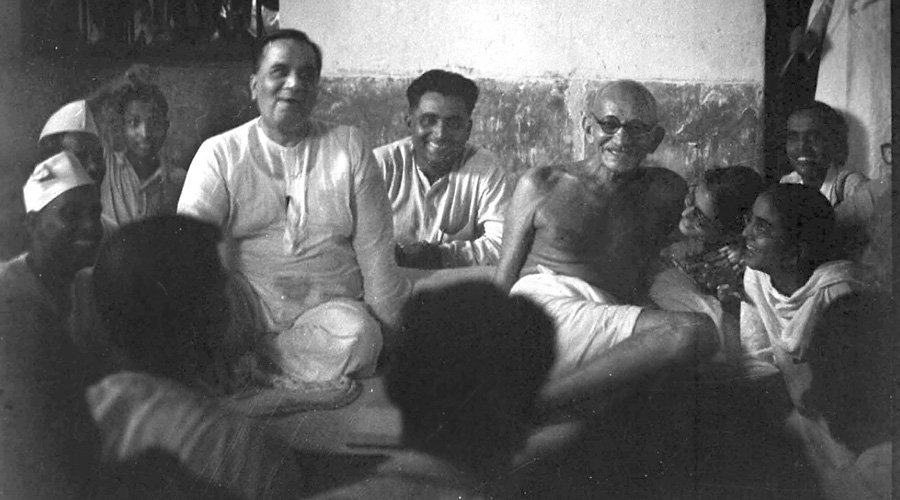
Mahatma Gandhi became one of the most influential leaders of India’s independence movement. He believed that Indians could challenge British rule through truth, non-violence, peaceful resistance, and public unity.
Gandhi returned to India from South Africa in 1915. He had already developed his philosophy of Satyagraha, which focused on resisting injustice without using violence.
Some of his major movements included:
1. Champaran Satyagraha (1917)
Gandhi supported farmers in Champaran, Bihar, who were forced by British indigo planters to grow indigo under unfair conditions. His involvement helped bring attention to their suffering.
2. Kheda Satyagraha (1918)
Farmers in Kheda, Gujarat, faced crop failure and financial difficulties. Gandhi supported their demand for tax relief from the British government.
3. Non-Cooperation Movement (1920–1922)
Gandhi encouraged Indians to boycott British institutions, foreign goods, government schools, and colonial honours. The movement attracted widespread public participation but was withdrawn after the violent incident at Chauri Chaura in February 1922.
4. Civil Disobedience Movement (1930)
The movement began with the historic Salt March, when Gandhi and his followers walked from Sabarmati Ashram to Dandi to challenge the British salt tax.
On 6 April 1930, Gandhi broke the salt law by making salt from seawater. This simple act inspired protests across India.
Gandhi’s approach encouraged ordinary citizens to participate in the independence movement and made British rule increasingly difficult to defend.
Revolutionary Freedom Fighters and Their Sacrifices
India’s independence struggle was not limited to peaceful protests. Many revolutionaries believed that armed resistance was necessary to challenge British colonial power.
Their courage and sacrifices inspired generations of Indians.
Some important revolutionary figures included:
Bhagat Singh: He became a symbol of courage and patriotism. Along with Rajguru and Sukhdev, he was executed by the British on 23 March 1931.
Chandra Shekhar Azad: He was a prominent revolutionary who resisted British rule and died during a confrontation with colonial police in Allahabad in 1931.
Subhas Chandra Bose: Popularly known as Netaji, he believed that stronger military action was necessary to achieve independence. He reorganized the Indian National Army (INA) and worked to challenge British authority.
Rani Lakshmibai: Her resistance during the Revolt of 1857 continued to inspire later generations of freedom fighters.
Sarojini Naidu: She played an important role in the national movement and participated in the Civil Disobedience Movement.
Aruna Asaf Ali: She became an important figure in the Quit India Movement and is remembered for hoisting the Indian National Congress flag at Gowalia Tank Maidan in Bombay in August 1942.
Thousands of other people also contributed to the struggle. Their names may not all appear in history books, but their participation helped build a powerful national movement.
The Quit India Movement of 1942
The Quit India Movement was one of the most significant events in the final phase of India’s freedom struggle.
On 8 August 1942, the Indian National Congress passed the Quit India Resolution at Bombay, demanding an immediate end to British rule.
Mahatma Gandhi gave the famous call of “Do or Die” to encourage Indians to continue their struggle for freedom.
The British government responded by arresting Gandhi and other major Congress leaders.
Despite these arrests, protests spread across several parts of India. Students, workers, farmers, and ordinary citizens participated in demonstrations and acts of resistance.
The movement faced severe repression, including arrests, police violence, and restrictions on political activity.
Although it did not immediately achieve independence, the Quit India Movement demonstrated the strength of public opposition to British rule.
It made clear that maintaining colonial control without Indian cooperation was becoming increasingly difficult.
World War II and the Final Years of British Rule
The Second World War, which began in 1939, significantly changed the political situation in India.
The British government involved India in the war without consulting Indian political leaders. This decision created further tension between the colonial administration and Indian nationalists.
India contributed soldiers, resources, and financial support to the British war effort.
Meanwhile, Subhas Chandra Bose worked to organize the Indian National Army with the aim of ending British rule through military action.
After World War II ended in 1945, Britain faced serious economic difficulties. Its financial position had weakened, and maintaining control over India became increasingly challenging.
The Indian National Army trials of 1945–46 also generated widespread public sympathy for the soldiers accused of fighting against British rule.
In February 1946, the Royal Indian Navy uprising further demonstrated growing dissatisfaction within sections of the armed forces.
These developments, together with decades of political resistance and mass movements, increased pressure on Britain to transfer power.
The Road to India’s Independence in 1947
By 1946, it had become increasingly clear that British rule in India could not continue in its previous form.
The British government sent the Cabinet Mission to India in March 1946 to discuss a plan for transferring power.
However, disagreements between the Indian National Congress and the All-India Muslim League over political representation and the future structure of India created serious difficulties.
Muhammad Ali Jinnah and the Muslim League demanded Pakistan as a separate state.
Political tensions increased, and communal violence spread in several regions.
In June 1947, Lord Mountbatten, the last Viceroy of British India, announced a plan for the partition of British India into two independent dominions: India and Pakistan.
The Indian Independence Act received Royal Assent on 18 July 1947. It provided the legal framework for the creation of the two independent dominions.
India became independent on 15 August 1947, while Pakistan marked its independence on 14 August 1947.
After years of struggle, British colonial rule finally came to an end.
Partition of India: The Pain Behind Freedom
India’s independence brought celebration, but Partition also created one of the most painful chapters in the subcontinent’s history.
In August 1947, British India was divided into India and Pakistan. The partition involved the division of territories, administrative institutions, military resources, and communities.
The new borders separated families, villages, and communities that had lived together for generations.
Large numbers of people crossed the newly created borders in search of safety. Communal violence occurred in several areas, particularly Punjab and Bengal.
Millions of people were displaced, and hundreds of thousands lost their lives. The exact death toll remains disputed among historians.
Partition created lasting social, political, and emotional consequences for both countries.
It reminds us that India’s independence was not only a story of victory but also a story of immense human suffering.
15 August 1947: India Becomes Independent
At midnight between 14 and 15 August 1947, India officially became an independent nation.
Jawaharlal Nehru delivered his famous “Tryst with Destiny” speech to the Constituent Assembly on the night of 14 August.
The following day, he became India’s first Prime Minister.
The Indian national flag was raised as a symbol of freedom, unity, and national identity.
For millions of Indians, independence represented the end of foreign colonial rule and the beginning of a new political future.
The country now had the responsibility of building its own government, institutions, economy, and democratic system.
Independence Day continues to be celebrated every year on 15 August throughout India.
Challenges Faced by India After Independence
Although independence brought new opportunities, the country faced enormous challenges.
1. Refugee Rehabilitation
Partition forced millions of people to leave their homes. The government had to arrange shelter, food, employment, and rehabilitation for displaced families.
2. Integration of Princely States
At independence, India contained hundreds of princely states. Sardar Vallabhbhai Patel played a major role in integrating most of these states into the Indian Union.
3. Economic Development
India inherited widespread poverty, limited industrial development, low literacy, and economic inequality. Building a stronger economy became a major national priority.
4. Establishing Democracy
India needed a stable political system that could represent its diverse population. The Constituent Assembly worked to prepare a Constitution for the country.
On 26 November 1949, the Constitution was adopted, and it came into effect on 26 January 1950. India then became a sovereign democratic republic.
These achievements laid the foundation for modern India.
The Legacy of India’s Freedom Struggle
India’s independence was the result of decades of political movements, public participation, sacrifices, and negotiations.
The freedom struggle brought together people from different religions, languages, regions, and communities.
Mahatma Gandhi’s philosophy of non-violence influenced political movements around the world. Revolutionary leaders inspired courage and resistance, while political leaders worked towards establishing an independent nation.
Women also played important roles. Leaders such as Sarojini Naidu, Kasturba Gandhi, Kamaladevi Chattopadhyay, and Aruna Asaf Ali helped strengthen the national movement.
The contribution of ordinary Indians was equally important. Farmers, workers, students, teachers, and countless families supported the struggle in different ways.
Today, India’s independence reminds us of the importance of freedom, equality, unity, democracy, and responsibility.
Remembering the Meaning of Freedom
India’s independence in 1947 was a historic achievement built on generations of courage, determination, and sacrifice. From the Revolt of 1857 to the Quit India Movement, the journey to freedom involved countless people who challenged British colonial rule.
On 15 August 1947, India finally became independent, beginning a new chapter in its history. However, freedom also came with the painful consequences of Partition and the difficult responsibility of rebuilding a nation.
Remembering India’s freedom struggle is not simply about celebrating a historic date. It is about understanding the sacrifices of those who fought for independence and respecting the democratic values they helped make possible.
Every Independence Day gives us an opportunity to remember our history and reflect on our responsibility towards India’s future.
Frequently Asked Questions
1. When did India get independence?
Ans: India became independent on 15 August 1947, ending British colonial rule.
2. Who was the first Prime Minister of independent India?
Ans: Jawaharlal Nehru became India’s first Prime Minister.
3. Who is known as the Father of the Nation in India?
Ans: Mahatma Gandhi is widely known as the Father of the Nation.
4. What was the Quit India Movement?
Ans: It was a mass movement launched by the Indian National Congress on 8 August 1942, demanding an end to British rule.
5. Why was India divided in 1947?
Ans: Partition followed political disagreements over the transfer of power and demands for a separate Muslim-majority state, Pakistan.
6. Who played an important role in integrating princely states into India?
Ans: Sardar Vallabhbhai Patel played a leading role in integrating princely states into the Indian Union.
7. When is Indian Independence Day celebrated?
Ans: India celebrates Independence Day every year on 15 August.