The First Human Heart Transplant: A Medical Revolution in 1967
INDUSTRY | 1967
On 3 December 1967, South African surgeon Dr Christiaan Barnard led a medical team that performed the world’s first widely recognised successful human-to-human heart transplant. The historic operation took place at Groote Schuur Hospital in Cape Town, South Africa, and marked a turning point in modern medicine.
For the first time, surgeons successfully replaced a failing human heart with a donor heart that continued beating inside another person’s body. The achievement captured worldwide attention and opened a new chapter in the history of organ transplantation.
The Beginning of Organ Transplantation
Before surgeons attempted to transplant a human heart, medical researchers had already made important progress with other organs.
The kidney became the first major human organ to be successfully transplanted. On 17 June 1950, American surgeon Dr Richard H. Lawler performed a kidney transplant on 44-year-old Ruth Tucker, who suffered from severe kidney disease.
The donor kidney came from a deceased patient. After the operation, the transplanted organ began functioning, demonstrating that a human organ could survive inside another person’s body.
Tucker lived for approximately five years after the operation, although the transplanted kidney eventually failed.
This achievement encouraged surgeons to investigate whether other vital organs, including the heart, could also be replaced.
The Race to Transplant a Human Heart
During the 1950s and 1960s, heart surgeons began exploring the possibility of replacing a severely damaged heart.
One of the leading pioneers was American surgeon Dr Norman Shumway, who successfully transplanted a heart into a dog in 1958. His research helped develop important surgical techniques that later contributed to human heart transplantation.
In January 1964, American surgeon Dr James D. Hardy attempted the first human heart transplant in the United States. His patient, Boyd Rush, received a chimpanzee’s heart after his own heart failed. The transplanted heart functioned briefly, but Rush survived for only a few hours.
Although the attempt was unsuccessful, it demonstrated the possibilities and difficulties of transplant surgery.
The international race to perform a successful human heart transplant continued.
The Historic Operation: 3 December 1967
On 3 December 1967, the medical breakthrough finally arrived in South Africa.
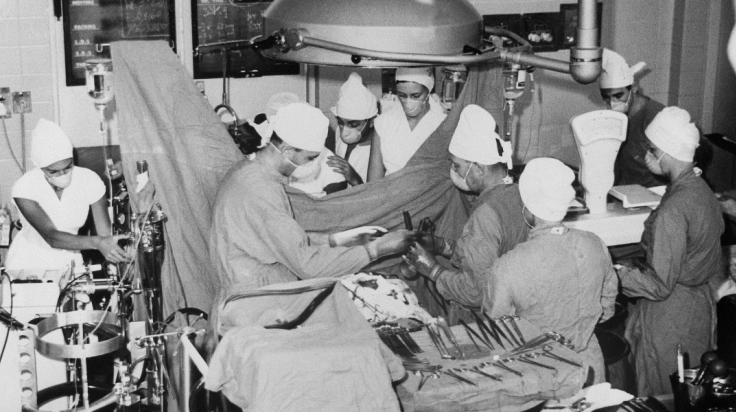
At Groote Schuur Hospital in Cape Town, Dr Christiaan Barnard led a surgical team of approximately 30 doctors and nurses in a historic operation.
The donor was 25-year-old Denise Ann Darvall, who had suffered fatal injuries in a road accident. Her father agreed to donate her organs, allowing doctors to use her heart for transplantation.
The recipient was 53-year-old Louis Washkansky, a South African businessman and grocer suffering from severe heart disease. His condition had become critical, and doctors believed a heart transplant offered his best chance of survival.
During the operation, surgeons removed Washkansky’s failing heart and carefully connected the donor heart to his major blood vessels.
After circulation was restored, the transplanted heart began beating.
The operation was a remarkable surgical achievement. For the first time, a human heart had been successfully transplanted into another person and continued functioning.
A Medical Victory Followed by Tragedy
Initially, Washkansky’s recovery appeared promising. His new heart functioned effectively, and doctors closely monitored his condition.
However, the operation presented a major medical challenge. The human immune system naturally recognises transplanted organs as foreign tissue and attempts to reject them.
To prevent this reaction, doctors administered immunosuppressive drugs. Although these medicines helped protect the transplanted heart, they also weakened Washkansky’s immune system.
On 21 December 1967, just 18 days after the operation, Washkansky died from pneumonia.
Despite his death, the transplanted heart had continued functioning. The operation demonstrated that replacing a human heart was technically possible, although preventing infection and organ rejection remained major challenges.
The Second Heart Transplant: A Longer Survival
Dr Barnard continued his work after the first operation.
On 2 January 1968, he performed his second human heart transplant. The recipient was Dr Philip Blaiberg, a retired South African dentist suffering from advanced heart disease.
This operation produced a much more encouraging result. Blaiberg survived for approximately 594 days, or around 19 months, after receiving his donor heart.
His survival provided further evidence that heart transplantation could extend the lives of patients suffering from serious heart conditions.
Barnard’s achievements attracted international attention and encouraged hospitals and surgeons around the world to develop heart transplantation programmes.
The Medical Breakthrough That Changed the World
The first human heart transplant created enormous excitement throughout the medical community.
However, early transplant programmes faced serious difficulties. Organ rejection, infections and the limited effectiveness of available medicines caused many patients to die shortly after surgery.
During the following decades, medical research produced significant improvements. Better surgical techniques, improved organ preservation and more effective immunosuppressive medicines helped increase the success of heart transplantation.
The introduction of cyclosporine in the 1980s was particularly important because it significantly improved the prevention of organ rejection.
Heart transplantation gradually developed from an experimental procedure into an established treatment for selected patients with advanced heart failure.
Where Were You When? The World Watches History
The December 1967 operation became an international media sensation. Newspapers, television networks and magazines reported the achievement, making Dr Christiaan Barnard one of the most recognisable surgeons in the world.
On 24 December 1967, Barnard appeared on the American television programme Face the Nation alongside fellow pioneering heart surgeons Dr Michael DeBakey and Dr Adrian Kantrowitz. Their discussion highlighted the growing international interest in the future of heart surgery.
The historic operation also brought attention to the generosity of Denise Darvall’s family, whose decision to donate her organs helped make the medical breakthrough possible.
The Legacy of the First Human Heart Transplant
The first human heart transplant was more than an extraordinary surgical achievement. It represented courage, scientific progress and the determination of medical professionals to overcome the limits of human medicine.
Dr Christiaan Barnard demonstrated that a human heart could be replaced successfully. The earlier research of Norman Shumway, the pioneering attempt by James Hardy and the contributions of countless doctors and scientists all helped make this achievement possible.
Louis Washkansky’s short survival revealed the challenges that still needed to be overcome, while Philip Blaiberg’s longer survival offered new hope for the future.
Today, heart transplantation is an established life-saving treatment for people with advanced heart failure.
The operation performed in Cape Town on 3 December 1967 remains one of the defining medical milestones of the twentieth century.
A new heart gave medicine a new future.