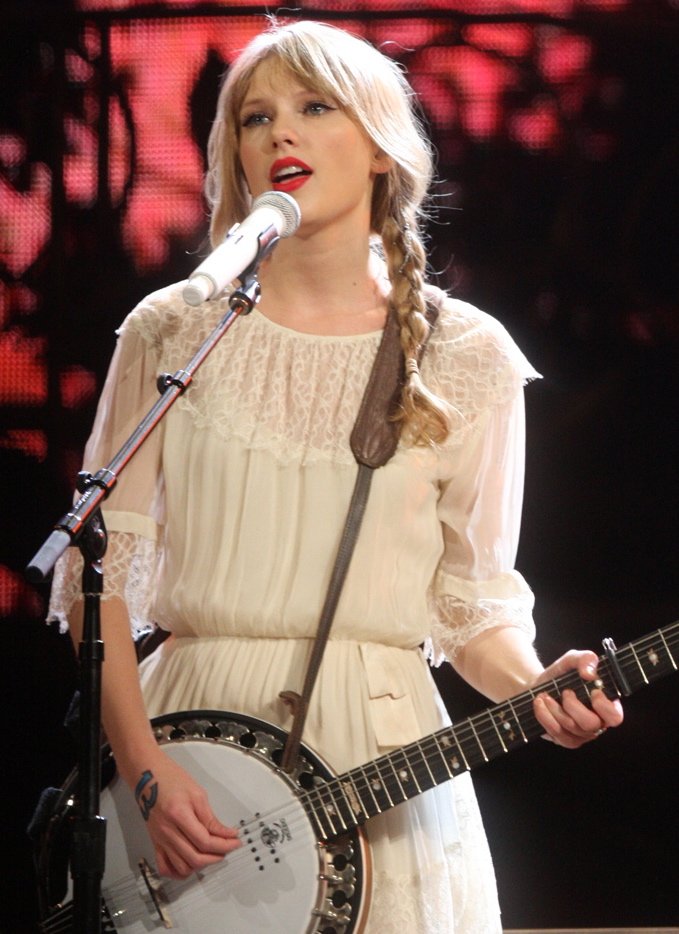
Person: Taylor Swift
Taylor Swift From Country Singer to Global Pop Icon
Taylor Swift’s journey from a teenage country singer to a global pop icon is one of the defining music stories of the twenty-first century. Through songwriting, musical experimentation, record-breaking performances, and a determined approach to artistic ownership, Swift has built a career that extends far beyond the recording studio.
Born in Pennsylvania in 1989, Swift began pursuing music at a young age. Her 2006 self-titled debut album introduced her as a promising country songwriter. Over the following two decades, she expanded into mainstream pop, explored alternative musical styles, and became a central figure in conversations about the modern music industry.
Her story illustrates how talent, reinvention, and a lasting connection with audiences can shape a remarkable musical career.
Early Life and Musical Beginnings
Taylor Alison Swift was born on December 13, 1989, in Reading, Pennsylvania, United States. She grew up near Wyomissing and developed an interest in music, performance, and storytelling during childhood.
Swift began performing at local events and learned to play guitar while developing her songwriting abilities. Country music became an important influence, particularly its emphasis on characters, emotions, and stories drawn from everyday experiences.
As her ambitions grew, Swift and her family moved to Hendersonville, Tennessee, near Nashville, to help her pursue a professional music career. Nashville’s established country music industry provided opportunities to develop her songwriting and connect with music professionals.
Her early experiences helped shape the direct, narrative-driven writing style that would become a defining feature of her work.
The Debut Album That Started Her Career
In 2006, at the age of 16, Swift released her self-titled debut album, Taylor Swift. Its lead single, “Tim McGraw,” introduced her to country music audiences and demonstrated her ability to transform personal experiences into songs.
Other tracks, including “Teardrops on My Guitar” and “Our Song,” helped establish her identity as a young songwriter with a distinctive voice.
The album’s reception provided a foundation for her future success. Rather than relying solely on her performance, Swift placed considerable emphasis on writing songs that listeners could connect with emotionally.
Her debut also established a creative approach that continued throughout her career: drawing inspiration from personal observations while developing stories that audiences could interpret through their own experiences.
Fearless: The Breakthrough to International Recognition
Swift’s second studio album, Fearless, was released in 2008. It expanded her audience beyond country music through songs such as “Love Story” and “You Belong with Me.”
These recordings combined country influences with accessible pop melodies, helping her reach listeners across genres.
At the 2010 Grammy Awards, Fearless won Album of the Year. Swift became the youngest artist at that time to win the category, marking an important milestone in her career.
The achievement established her as a major recording artist and demonstrated that a songwriter emerging from country music could achieve broad recognition in the international music industry.
From Country Music to Mainstream Pop
Swift’s sound developed considerably during the early 2010s. Albums such as Speak Now (2010) and Red (2012) explored different musical arrangements, combining country, pop, and rock influences.
The release of 1989 in 2014 marked a major turning point. Built around synth-pop production, the album featured successful singles including “Shake It Off,” “Blank Space,” and “Style.”
This change represented more than a new musical style. It showed Swift’s willingness to take creative risks while maintaining the storytelling and lyrical detail that had attracted her original audience.
Her transition also illustrated how artists can cross traditional genre boundaries and reach new listeners without abandoning the qualities that made their work distinctive.
Reinvention Through Different Musical Eras
Swift continued to explore new creative directions throughout her career.
Her 2017 album Reputation adopted a darker electronic-pop sound and explored public perception, conflict, and personal identity. Lover, released in 2019, returned to brighter pop arrangements and examined love and relationships.
In 2020, Swift released Folklore and Evermore. These albums incorporated indie folk and alternative pop influences, with more fictional characters, detailed narratives, and atmospheric production.
Her 2022 album Midnights returned to synth-pop, exploring reflection and experiences associated with sleepless nights.
In 2024, she released The Tortured Poets Department, adding another chapter to her evolving catalogue. In October 2025, she released The Life of a Showgirl, continuing her development as a recording artist.
These different eras demonstrate that Swift’s career cannot be defined by a single genre. Her ability to change her sound while maintaining a recognizable songwriting identity has been central to her longevity.
Taylor’s Version: Music Ownership and Creative Control
One of the most significant business developments in Swift’s career concerned ownership of her original master recordings.
After the ownership of her earlier recordings changed, Swift began re-recording selected albums. The new releases, branded Taylor’s Version, allowed her to present fresh recordings of earlier songs alongside additional tracks in some releases.
The project attracted attention to an important distinction in the music business: the rights to a musical composition and the rights to a particular sound recording can be separate assets.
Swift’s re-recordings also demonstrated how an established audience can support an artist’s effort to reshape the commercial future of earlier work.
In May 2025, Swift announced that she had bought back the rights to her original recordings. In a statement published on her official website, she described the acquisition as a major personal milestone.
The development brought a new chapter to a story that had encouraged wider discussion about music contracts, recording ownership, and artists’ creative independence.
The Eras Tour: A Global Live-Music Phenomenon
Swift’s Eras Tour began in March 2023 and concluded in December 2024. The production celebrated different stages of her career, with sections devoted to albums and musical periods from her catalogue.
Rather than promoting a single release, the tour presented her musical evolution as a connected story. Its elaborate staging, costume changes, visual design, and extensive setlist turned the concerts into large-scale productions.
The tour attracted international audiences and generated substantial activity for local businesses in host cities, including hotels, restaurants, transport services, and retail outlets.
It also strengthened the role of fan communities in modern entertainment. Concertgoers shared experiences, outfits, recordings, and discussions across digital platforms, helping the tour remain visible beyond the venues themselves.
The Eras Tour became an important example of how live music can combine performance, cultural identity, tourism, and digital participation.
Awards and Achievements
Swift has received major recognition across the country and pop music industries. According to the Recording Academy, she has won 14 Grammy Awards and holds the record for the most Album of the Year wins by an artist, with four victories for Fearless, 1989, Folklore, and Midnights.
Her achievements reflect both commercial success and sustained recognition from the music industry.
Songwriting remains central to her work. Her songs often use detailed imagery, narrative progression, emotional contrasts, and memorable phrases to create a strong connection with listeners.
She has also influenced discussions about how musicians release music, build audiences, distribute recordings, and negotiate ownership of their creative work.
Taylor Swift’s Influence on Popular Culture
Swift’s impact reaches beyond the music charts. Her releases can inspire extensive public discussion, while her concerts bring together audiences from different countries and generations.
Her career also highlights the relationship between music and digital culture. Streaming services, social media, online fan communities, and direct communication with listeners have all become important parts of the modern music landscape.
At the same time, her experience with recording ownership has helped make technical music-business issues more accessible to the public.
Her influence can therefore be understood through several connected areas: songwriting, performance, audience engagement, commercial strategy, and creative control.
Taylor Swift’s Legacy in Modern Music
Taylor Swift’s career reflects the changing nature of popular music in the twenty-first century. She began as a teenage country performer, moved into mainstream pop, explored alternative sounds, and built an international reputation through both recorded music and live performances.
Her ability to adapt has been accompanied by a consistent emphasis on storytelling. That combination has allowed her work to reach new audiences while retaining connections with longtime listeners.
Her re-recording projects and subsequent return to ownership of her original recordings also added an important business dimension to her story.
As her career continues, Swift remains a significant subject for understanding contemporary music, celebrity culture, songwriting, and the evolving relationship between artists and the music industry.
From her early country recordings to global pop success, Taylor Swift’s journey demonstrates the power of songwriting, artistic development, and a lasting relationship with audiences.
Her albums document changing musical styles, while her live performances and business decisions reveal how the role of a modern recording artist has evolved.
For Living History, her story offers a useful example of recent cultural history: one in which music, technology, business, and popular culture intersect to shape an artist’s legacy.