The Suez Crisis of 1956: The Canal Dispute That Changed World Power
The Suez Crisis of 1956 was a major international conflict that exposed the changing balance of power in the postwar world. It began when Egyptian president Gamal Abdel Nasser nationalized the Suez Canal, a strategically important waterway connecting the Mediterranean Sea to the Red Sea. Britain and France viewed the decision as a threat to their economic and strategic interests, while Israel had its own security concerns involving Egypt.
In response, Israel invaded Egypt in October 1956, followed by military intervention by Britain and France. However, strong opposition from the United States, the Soviet Union, and the United Nations forced the invading powers to halt their operations and withdraw.
Although the military campaign demonstrated the capabilities of the invading forces, the crisis became a political disaster for Britain and France. It marked a turning point in the decline of traditional European imperial influence and strengthened Egypt’s position in the Arab world.
1. Why Was the Suez Canal So Important?
The Suez Canal is an artificial waterway in Egypt that connects the Mediterranean Sea with the Red Sea. Opened in 1869, it created a shorter maritime route between Europe and Asia by eliminating the need for many ships to travel around the southern tip of Africa.
The canal was especially important for international trade, oil transportation, and naval strategy. Britain depended heavily on routes connecting Europe with its interests in the Middle East and Asia. France also had substantial commercial and strategic interests in the region.
Although Egypt controlled the territory through which the canal passed, foreign financial and political interests had played a major role in the canal company’s history. Britain had acquired a substantial shareholding in the Suez Canal Company in 1875, and British forces occupied Egypt in 1882.
The canal therefore became a symbol of both international commerce and foreign influence over Egyptian affairs.
2. Gamal Abdel Nasser and Egyptian Nationalism
Following the Egyptian Revolution of 1952, which overthrew the monarchy, Gamal Abdel Nasser emerged as the country’s leading political figure. He became president in 1956 and promoted Egyptian independence, Arab nationalism, and the reduction of foreign influence in the Middle East.
Nasser believed that Egypt should control its own resources and make independent decisions about its economic development.
One of his most important ambitions was the construction of the Aswan High Dam on the Nile River. The proposed dam promised to improve irrigation, generate electricity, and support Egypt’s economic development.
However, negotiations over Western financial assistance deteriorated. In July 1956, the United States and Britain withdrew their offers of financial support for the project.
Nasser responded by nationalizing the Suez Canal Company on July 26, 1956. He intended to use the canal’s revenue to help finance the dam and demonstrate that Egypt could pursue its development without depending on Western governments.
The decision transformed a dispute over canal ownership into a major international confrontation.
3. Britain and France Plan Military Intervention
Britain and France strongly opposed the nationalization of the canal. Their governments feared that Nasser’s actions would weaken their strategic position and encourage other countries to challenge Western influence.
British Prime Minister Anthony Eden regarded Nasser as a serious threat to Britain’s interests in the Middle East. French leaders also opposed him, partly because of his support for Algerian nationalists fighting French rule in Algeria.The United States, however, opposed a military solution and preferred negotiations. American officials were concerned that an invasion would damage relations with Arab countries and increase Soviet influence during the Cold War.
Diplomatic efforts failed to produce an agreement acceptable to all sides.Britain and France subsequently entered secret negotiations with Israel. At a meeting near Sèvres, France, in October 1956, representatives of the three countries developed a plan for military intervention.
Under the arrangement, Israel would invade Egypt’s Sinai Peninsula. Britain and France would then issue an ultimatum demanding that both sides withdraw from the canal zone. Their governments intended to use Egypt’s expected rejection as a justification for intervening militarily.
The plan was designed to conceal the degree of cooperation between the three countries.
4. Israel Invades Egypt
On October 29, 1956, Israeli forces invaded the Sinai Peninsula. The operation rapidly placed Egyptian positions under pressure.
On October 30, Britain and France issued an ultimatum demanding that Egypt and Israel withdraw their forces from positions near the canal. Egypt rejected the ultimatum, while Israel had already agreed to the arrangement as part of the secret plan.
Britain and France began aerial attacks against Egyptian airfields on October 31. Their forces subsequently landed in the canal zone in early November.
The military campaign inflicted damage on Egyptian forces and infrastructure. However, it failed to achieve its wider political objectives.
Instead of restoring Britain’s and France’s authority over the canal, the invasion generated widespread international opposition.
5. International Opposition and the United Nations
The United States strongly opposed the Anglo-French intervention. President Dwight D. Eisenhower’s administration feared that the invasion would destabilize the Middle East and undermine Western credibility during the Cold War.
The Soviet Union also condemned the intervention and demanded that the invading forces stop their operations. The United Nations became the principal international forum for resolving the crisis.
On November 2, the UN General Assembly adopted a resolution calling for a ceasefire and the withdrawal of invading forces. Continued international pressure increased the political and economic costs of the operation.
Britain faced serious financial pressure, including concerns about its currency and access to international financial support. American opposition further weakened the British government’s ability to continue the campaign.
On November 6, 1956, Britain and France accepted a ceasefire. Israeli withdrawal followed through subsequent arrangements.
The United Nations established the United Nations Emergency Force, known as UNEF, to help supervise the ceasefire and separate the opposing forces. It was a landmark development in the use of UN peacekeeping.
6. The Political Consequences of the Crisis
The Suez Crisis produced consequences far beyond the immediate military confrontation.
Britain and France suffered a major diplomatic defeat. Their governments had demonstrated that military power alone could not guarantee their international objectives. Britain’s declining ability to act independently of the United States became particularly evident.
Anthony Eden’s political position collapsed. Facing intense criticism and growing pressure over his handling of the crisis, Eden resigned as prime minister in January 1957.
Nasser emerged with greater prestige. Although Egypt suffered military losses, Nasser could present the outcome as a victory against foreign intervention. His reputation as a defender of Egyptian sovereignty and Arab nationalism strengthened.
The United States gained greater influence in the Middle East. The crisis demonstrated Washington’s ability to exert decisive pressure on its European allies. It also encouraged American policymakers to take a more direct role in regional affairs.
The Soviet Union gained opportunities for influence. Moscow used the crisis to criticize Western imperialism and strengthen its diplomatic appeal in parts of the Arab world.
The crisis also demonstrated the growing importance of international institutions and global public opinion in disputes involving major powers.
7. The Suez Canal and the Global Economy
The canal’s importance extended far beyond the immediate conflict. Its position between Europe and Asia made it a critical route for merchant shipping, including oil shipments from the Middle East.
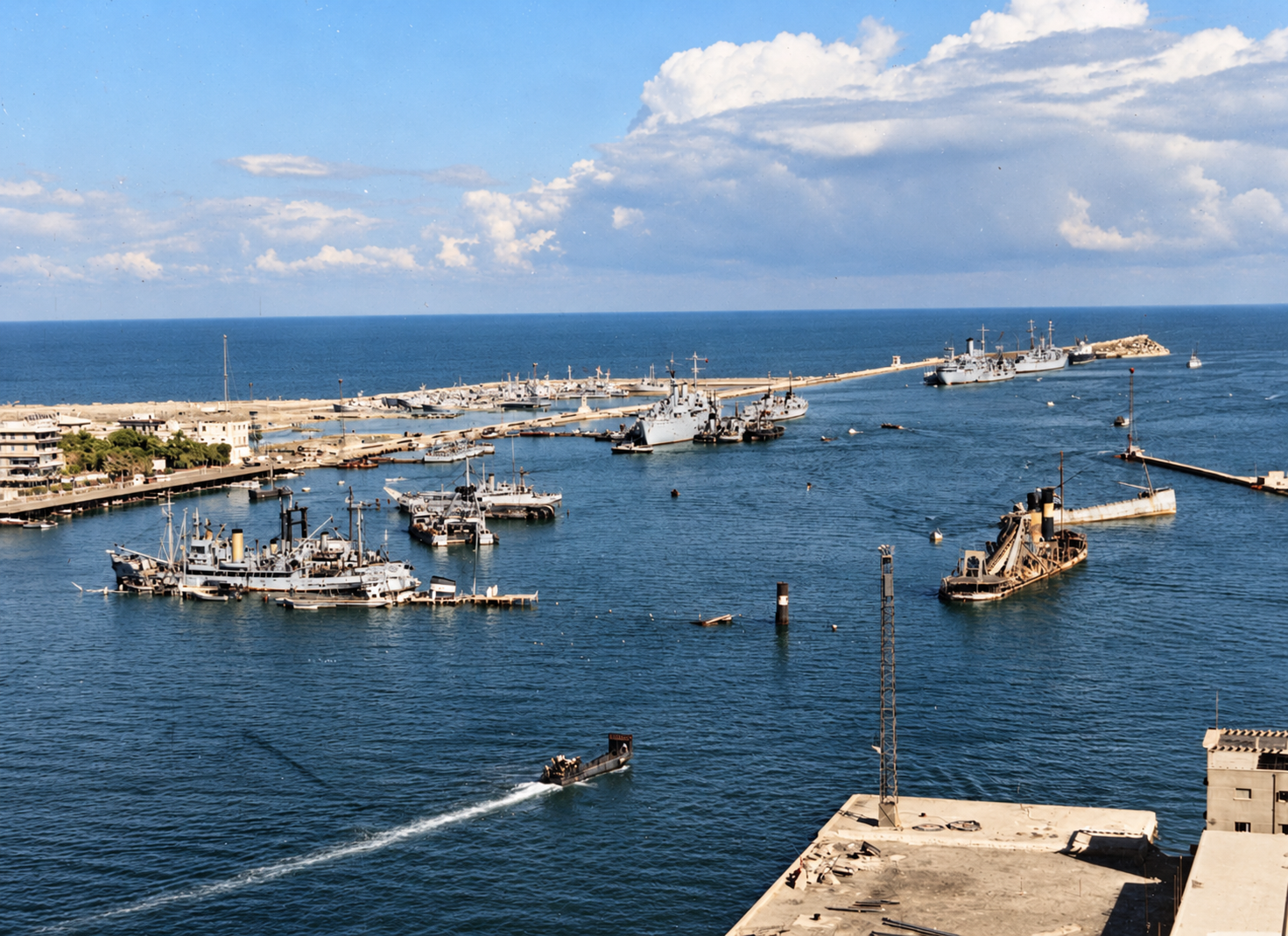
The crisis disrupted shipping through the canal, while military operations and damage to infrastructure complicated maritime transport. The waterway was closed during the conflict and did not resume normal operations until 1957.
The disruption highlighted the vulnerability of global trade to political instability and military confrontation.
For Britain, the crisis revealed how strongly its economic interests depended on international cooperation and access to financial support. For Egypt, control of the canal became an important symbol of sovereignty and the ability to manage a strategic national asset.
8. Why the Suez Crisis Matters in History
The Suez Crisis is widely regarded as a turning point in twentieth-century international relations.
It revealed the limits of British and French power in a world increasingly dominated by the United States and the Soviet Union. It also demonstrated that former colonial powers could no longer assume that military intervention would produce political success.
For Egypt and other countries emerging from colonial rule, the crisis reinforced the importance of national independence and control over strategic resources.
The conflict also helped establish a more prominent role for UN peacekeeping in international crisis management. Although the United Nations could not prevent the invasion, its involvement contributed to the ceasefire and the withdrawal process.
The Suez Crisis did not end European influence in the Middle East, nor did it resolve all disputes over the canal. Nevertheless, it marked a decisive moment in the transition from the old imperial order to a new international system shaped by superpower rivalry, nationalism and international diplomacy.
Conclusion
The Suez Crisis of 1956 began with Egypt’s nationalization of the Suez Canal Company but quickly developed into a confrontation involving regional ambitions, Cold War competition and the decline of European imperial power.
Israel’s invasion and the subsequent British and French intervention failed to secure their intended political objectives. International pressure forced a ceasefire and withdrawal, while Nasser’s position in Egypt and the Arab world grew stronger.
The crisis remains an important historical lesson: military superiority does not automatically translate into diplomatic success. The events of 1956 reshaped international relations and demonstrated that sovereignty, economic independence and global political opinion could decisively influence the outcome of a conflict.
Historical Timeline
-
1952: The Egyptian Revolution overthrows the monarchy and opens a new period of political change.
-
June 1956: British forces complete their withdrawal from the Suez Canal zone under the Anglo-Egyptian agreement.
-
July 26, 1956: Gamal Abdel Nasser announces the nationalization of the Suez Canal Company.
-
October 29, 1956: Israeli forces invade Egypt’s Sinai Peninsula.
-
October 31, 1956: British and French aerial attacks against Egypt begin.
-
November 2, 1956: The UN General Assembly adopts a resolution calling for a ceasefire and withdrawal.
-
November 6, 1956: Britain and France accept a ceasefire.
-
1957: The canal reopens to normal international shipping following the crisis.
References and Further Reading
-
Encyclopaedia Britannica — Suez Crisis
-
United Nations — United Nations Emergency Force (UNEF I)
-
Office of the Historian, U.S. Department of State — The Suez Crisis
-
Encyclopaedia Britannica — Suez Canal
Living History explores the people, conflicts and turning points that shaped the modern world.